

Want to share Berthelot with your friends? It’s super easyyyyy: just click the button below 👇
A new page will open — simply copy the link and paste it wherever you like: on LinkedIn, in your WhatsApp group chat, or even in your next enthusiastic email. 🐦✨
Remember: if you like this newsletter, this is the best support you can give me 🙏
Hello everyone,
I hope you are enjoying your summer, whether at work or already on vacation.
I have a few things to share in this introduction…
Let’s start with the less fun topic: the recent adoption of the Loi Duplomb in France. This legislation, aimed at easing constraints on farmers, includes worrying measures for biodiversity, notably the reintroduction of neonicotinoids such as acetamiprid—substances known for their toxicity to pollinators and their role in the decline of insect and bird populations. (30millionsdamis.fr)
This decision comes in an already concerning context: since 1980, Europe has lost about 800 million birds, an alarming figure that reflects the scale of the decline in birdlife. (lpo.fr)
The impacts of this law on birds are multiple:
Disruption of food chains: Neonicotinoids affect insects, the main food source for insectivorous birds, thus disturbing their diet and reproduction.
Loss of natural habitats: The law facilitates the expansion of industrial farming, leading to the destruction of wetlands and hedgerows, which are essential habitats for many bird species.
Alteration of aquatic ecosystems: The reintroduction of chemicals into natural environments can contaminate waterways, affecting aquatic birds and their food sources.
It’s crucial to stay informed and engaged on these issues to protect biodiversity and ecological balance.
If you want to take further action, you can participate in citizen gatherings near you or even “shake your MPs”.
On a more personal and exciting note, we are moving to Bordeaux in September! This change marks the start of a new professional adventure that I will be happy to share in more detail in upcoming issues.
In the meantime, it will give me the chance to get closer to a local LPO branch and contribute more directly to bird conservation!
I’m excited to see all this come to life!
In the meantime, let’s meet our bird of the day… which made a brief appearance in the latest “Sur le Front” episode by Hugo Clément, and which I wanted to describe in detail!
I hope you enjoy the episode!
See you in two weeks,
Emma
PS: For those who clicked on the blog article link, thank you so much— the site is still in its early stages and under construction, but if you’d like to explore, feel free (I recommend the desktop version over the mobile one) and don’t hesitate to let me know your thoughts on the project!
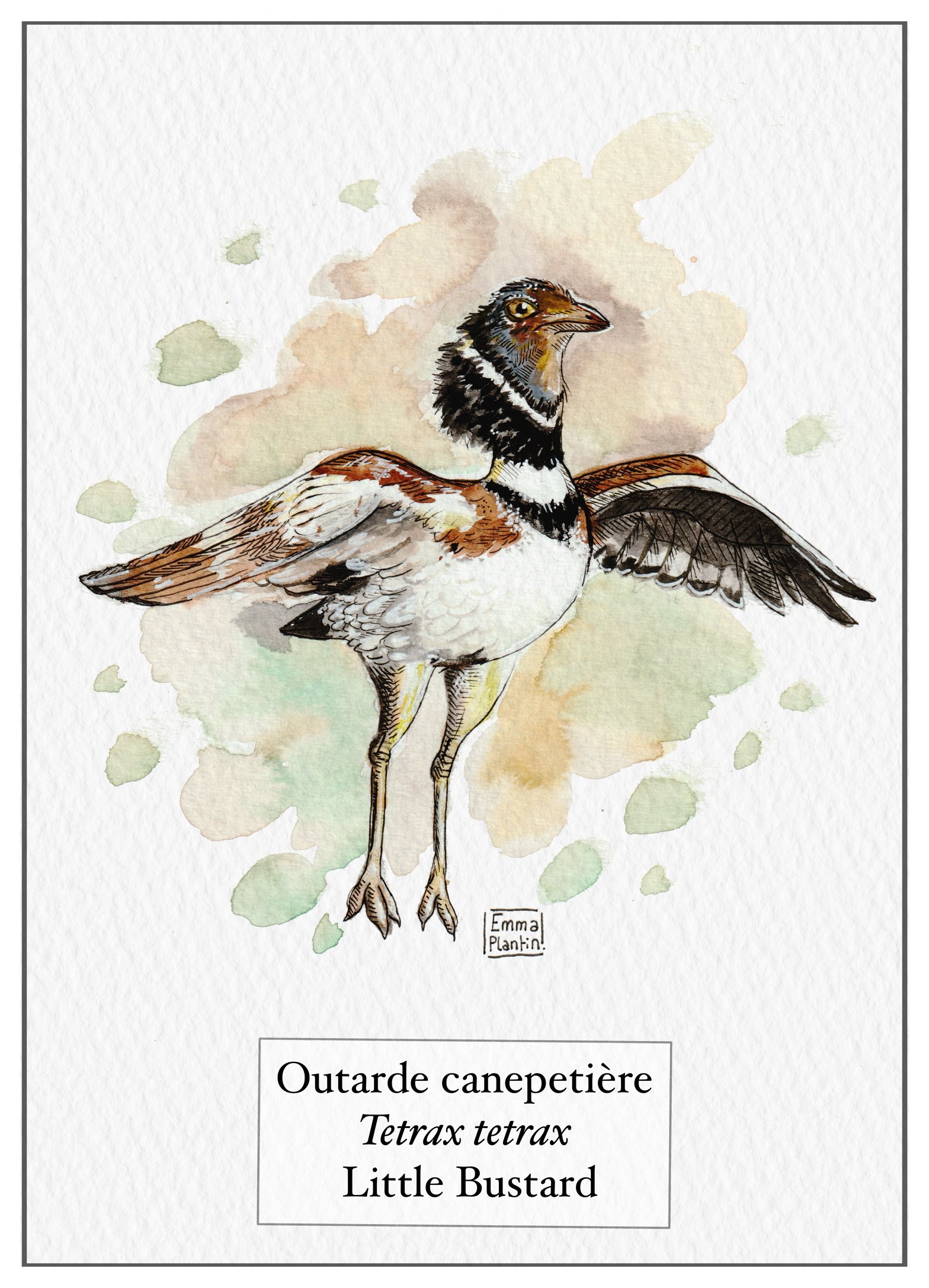
🦤 The Great Bustard — Tetrax tetrax
The name "canepetière" in french likely comes from the fact that the great bustard frequents cereal fields, often associated with areas of "cane" or sugarcane, or it could also be a reference to an old term used to describe fertile land suitable for agriculture.
🔍 What does it look like?
The great bustard is a large bird with a majestic and slender appearance.
Length: about 50 cm, slightly larger than a pigeon.
Plumage: Its plumage is mainly brown with beige and gray tones, dotted with white and black spots on the wings.
Crest: It has a small feather crest on its head that unfolds during its mating display.
Beak: Short and straight, often light yellow.
It is often discreet, blending well into fields and steppes, where it is easily camouflaged thanks to its terrestrial plumage.
⚤ Sexual Dimorphism
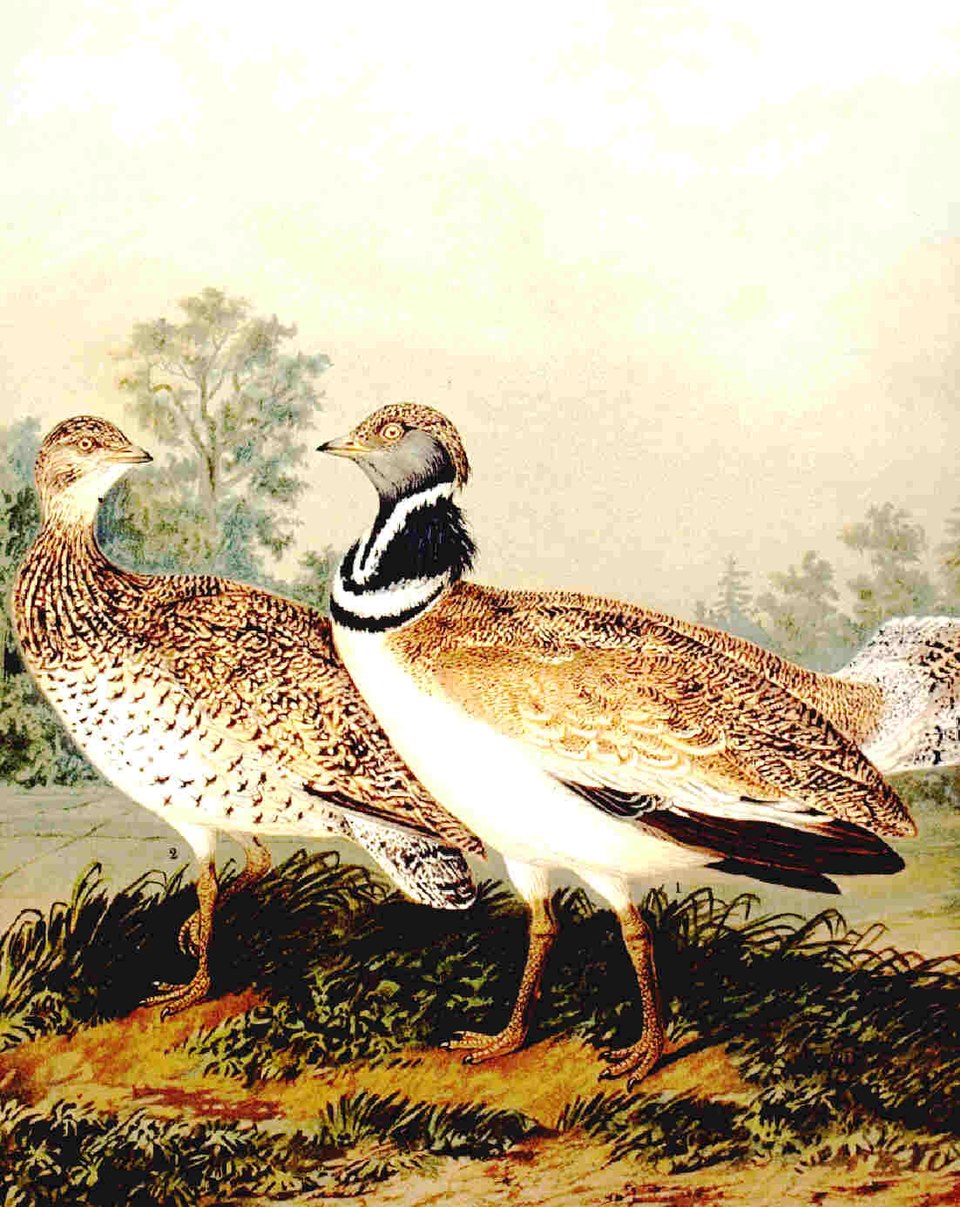
There is a marked sexual dimorphism in the great bustard, although it is subtle. Males are generally larger and more colorful than females. Their plumage is more contrasted, with more defined brown and white areas, and they have additional feathers on their neck and chest that they inflate during mating displays. Females, on the other hand, tend to have a more uniform appearance, with plainer, less adorned plumage.
🎶 A Low-frequency Call
The great bustard emits a deep, hoarse call, often heard during its mating displays (a "prrt" sound) at regular intervals (listen around 34:06). This call is characteristic and can be heard from hundreds of meters away. It serves to signal its presence, especially during breeding rites. In flight, its wings produce a whistling sound.
🧠 A Discreet but Strategic Bird
The great bustard is a highly territorial bird, particularly during the breeding season. Males establish areas that they defend vigorously. They are known for their spectacular mating displays: the male inflates its chest and spreads its feathers, while emitting powerful sounds to attract females.
🪺 How Do They Live?
Nest: The great bustard builds its nest on the ground, often in meadows or fields. The nest is typically made of grass and roots, well hidden in the vegetation.
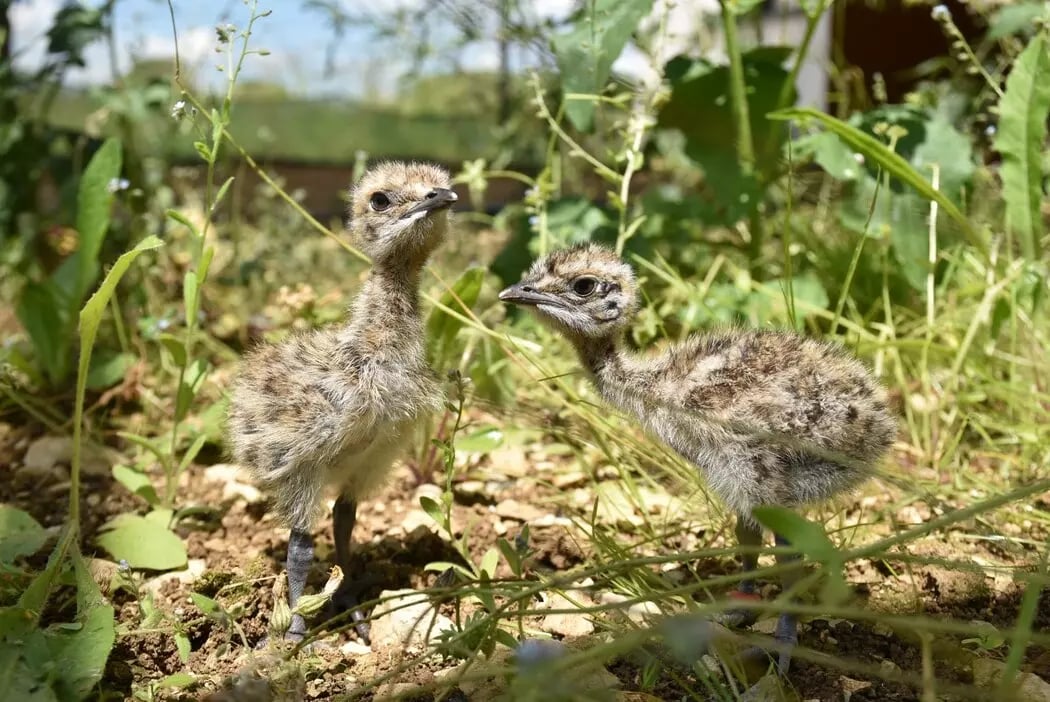
Eggs: The female lays 2 to 4 eggs, which she incubates alone for about 24 days. The chicks are born ready to fly shortly after hatching.
🌍 Habitat and Behavior
The great bustard lives in large, open plains, often in agricultural areas or meadows. It enjoys open terrain but is particularly vulnerable to changes in agricultural landscapes.
Its diet consists mainly of plants, seeds, and insects, making it an omnivore.
🍽️ Its Diet:
Seeds (cereals, wild plants),
Insects,
Flowers and roots.
It is primarily terrestrial and moves by walking, with slow and steady movements.
🌪️ A Threatened Bird
The great bustard is in serious danger. The intensification of agriculture, pesticide use, and habitat loss due to land consolidation have drastically reduced its populations. It is one of the most endangered species in France, with populations declining since the 1970s.
LAST ASSESSED: 07 August 2018
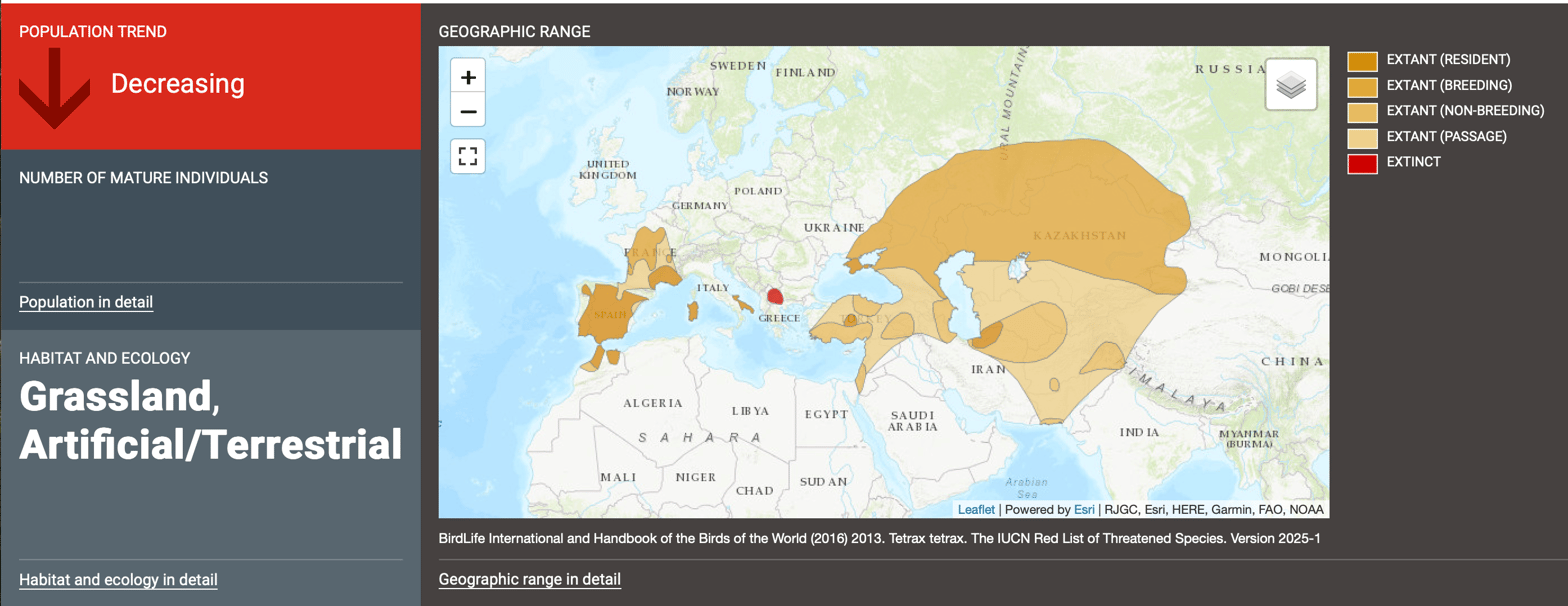
Status: Endangered, in France and several European countries.
Protection: Conservation programs are in place, but the species remains fragile.
🔴 Main Threats
Intensive farming: The disappearance of meadows and the use of chemicals (pesticides) directly impact its habitat and food supply.
Human disturbance: Traffic, urbanization, and intensive farming disrupt breeding sites and feeding areas.
🌍 Status and Conservation
The great bustard is a protected species in France. There are conservation actions (English abstract on page 5) underway, aiming to restore its natural habitat and raise awareness among farmers about less invasive practices.
💡 A Few Fun Facts
A film titled « Le chant des plaines by Laurent Joffrion shows how land consolidation and agricultural intensification have degraded the living conditions of certain species, including the great bustard in France (Poitou-Charentes), whose numbers have plummeted.
The great bustard has gradually become a symbol of the fight against megabassins. The protection of the species has been invoked by environmental associations in court, helping to prevent the construction of water reservoirs. The bustard is thus referred to as the "totem bird" in the protests held at Sainte-Soline.
The call of the male great bustard is a "prrt" sound, emitted at regular intervals. This distinctive sound, which can either be discreet or carry across the plains (depending on the wind direction), gives it the nickname "farting bird".
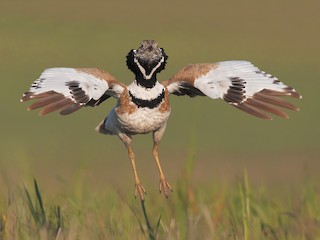
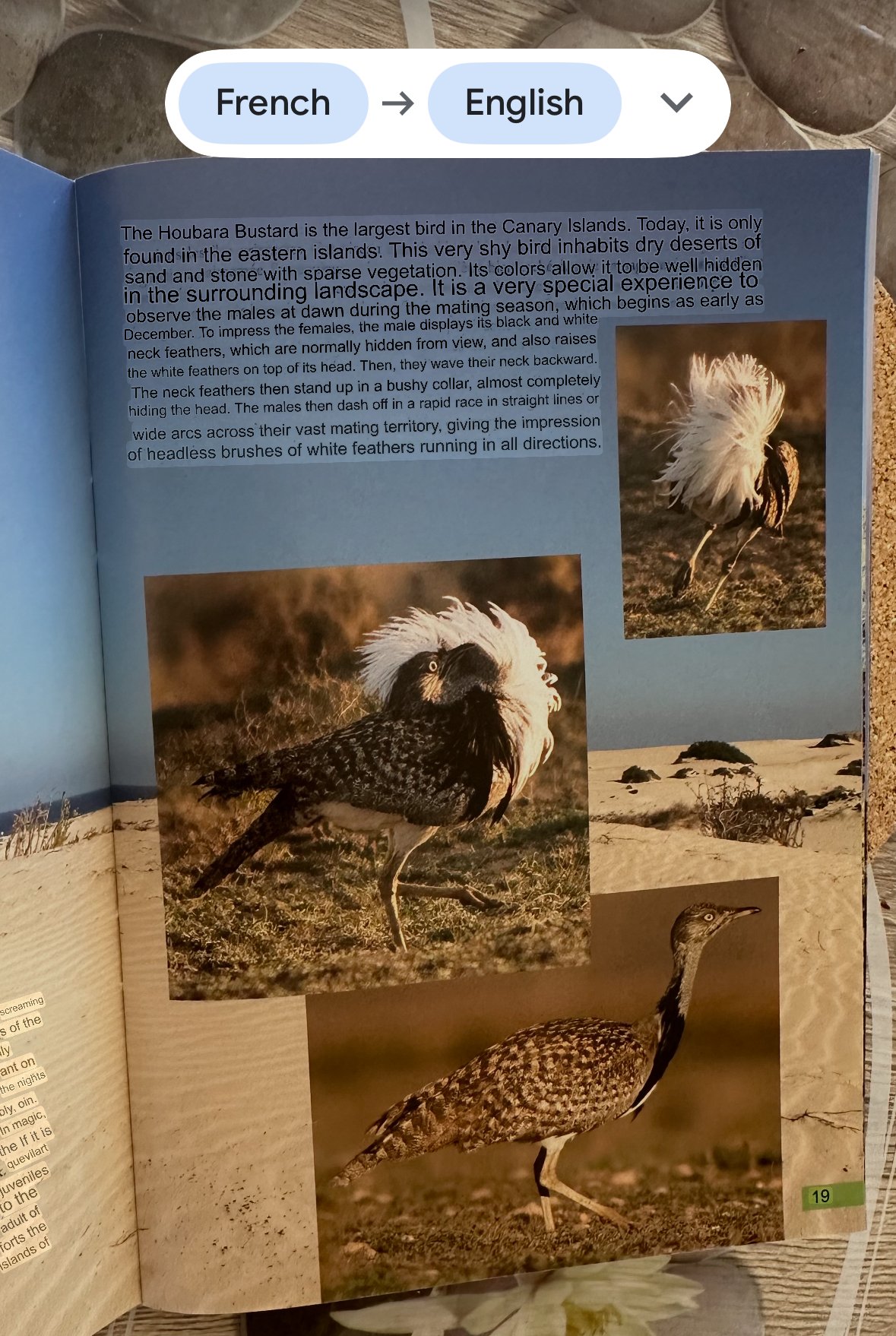
A little anecdote to end: While I was taking a short break for a dog walk between two writing sessions for this article, I spotted some birds running through the countryside. I managed to film them, and guess what? They were bustards! But not the great bustards... these are houbara bustards (Chlamydotis undulata), and they are quite discreet on the island! It was a sign 🤩
Below, I’ve included an excerpt from my wildlife identification book of Lanzarote:
And as if that coincidence wasn’t enough… a few weeks earlier, I had actually bought a small pouch with a houbara bustard illustration on it at the Teguise market, from a local bird illustrator (@dettaglilanzarote on Instagram).
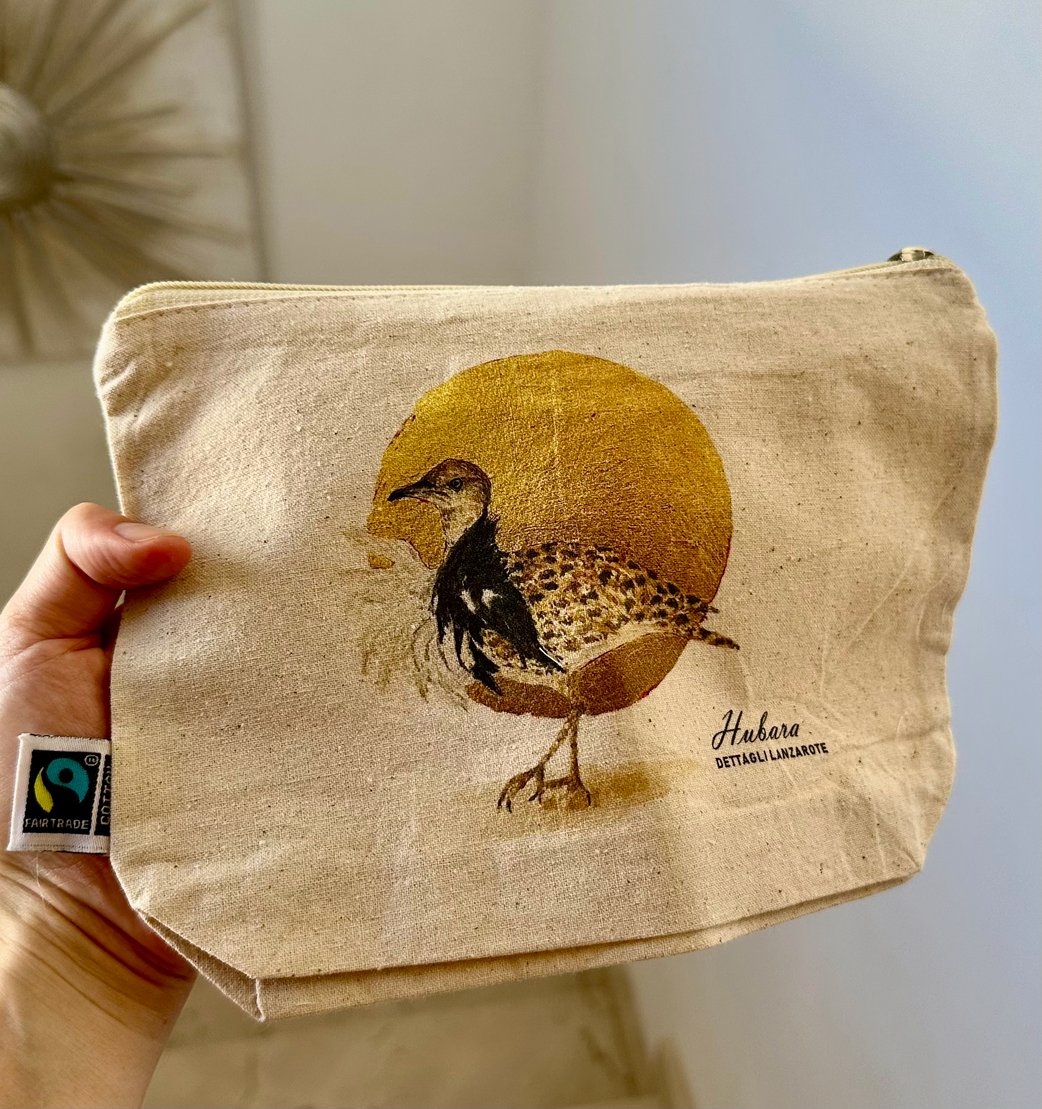
Funny enough, it was while wandering through the market and stumbling upon her drawings that the idea for Berthelot first started to sprout… 😍 So now you know everything!
Alright, I’ll stop bothering you with my bustards.
See you soon ! ☀️
🕊️ I need your help to make Berthelot fly further! 🙏
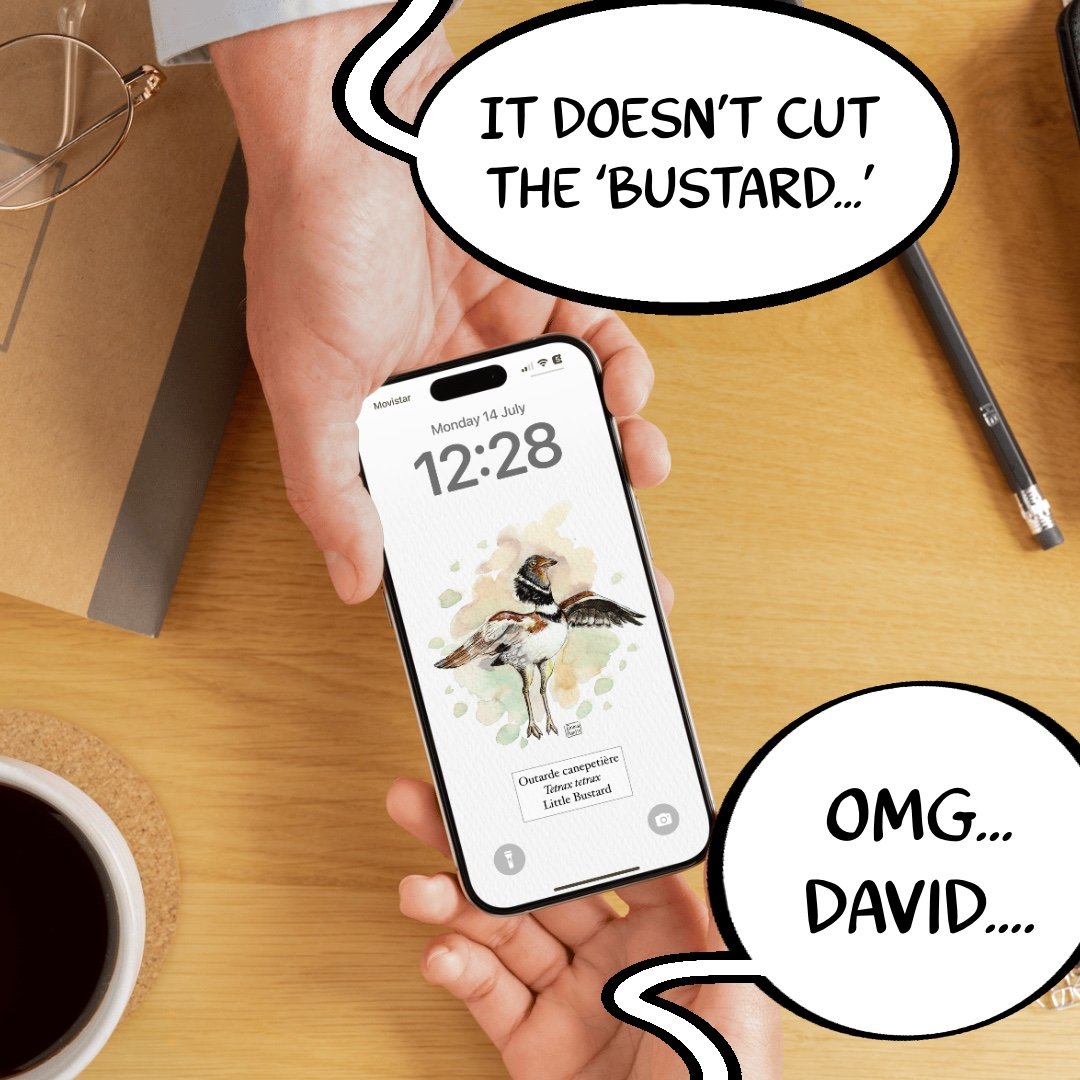
🎁 Support me by visiting the Berthelot Shop or by downloading a mobile wallpaper!
You'll find a gallery of all the birds I've drawn since the start of the project. Every purchase will be converted into a donation for bird protection associations.
👆And/Or 👇
Share your personal link (and earn rewards based on the number of subscribers who sign up!) 🎉