
Want to share Berthelot with your friends? It’s super easyyyyy: just click the button below 👇
A new page will open — simply copy the link and paste it wherever you like: on LinkedIn, in your WhatsApp group chat, or even in your next enthusiastic email. 🐦✨
Remember: if you like this newsletter, this is the best support you can give me 🙏
Hello everyone,
The petition against the Duplomb law in France has now gathered over 2 million signatures — a spectacular number!
It’s truly heartwarming to witness such national solidarity. Our feathered friends send a warm thank you to all who took part.
To give you a bit of context: the Duplomb law, passed earlier this July, eases environmental regulations in agriculture. It reauthorizes the use of a banned pesticide (acetamiprid), facilitates large-scale water reservoirs, and supports the expansion of industrial farming. Many see it as a major step backward for biodiversity and climate efforts.
Even though the petition won't overturn the law, it does trigger a public debate in Parliament this autumn. To be continued…
Today’s question…
I’ve been reflecting on something, and I’d really love your input.
Up until now, I’ve chosen to donate all contributions from this newsletter to a bird protection charity (LPO), because it felt like the most legitimate thing to do.
But some of you have told me you’d be just as happy to support my work directly — so I can keep creating this newsletter with the same care and passion.
What do you think?
Would you prefer that your donations support me directly, or that they continue going 100% to the association? (You can reply just below 👇)
Just a reminder: donations are entirely optional. This newsletter exists to raise awareness about birds — and it’s a project I pour my heart into.
Parenthesis closed... let’s meet today’s bird!
This one was chosen by one of you! By referring a new subscriber, she got to pick a species for me to feature. And here it is: the wonderful White Stork, iconic emblem of Alsace!
Stay with me — I’ve got some beautiful and surprising facts to share about it. 🪶
🕊️ The White Stork — Ciconia ciconia
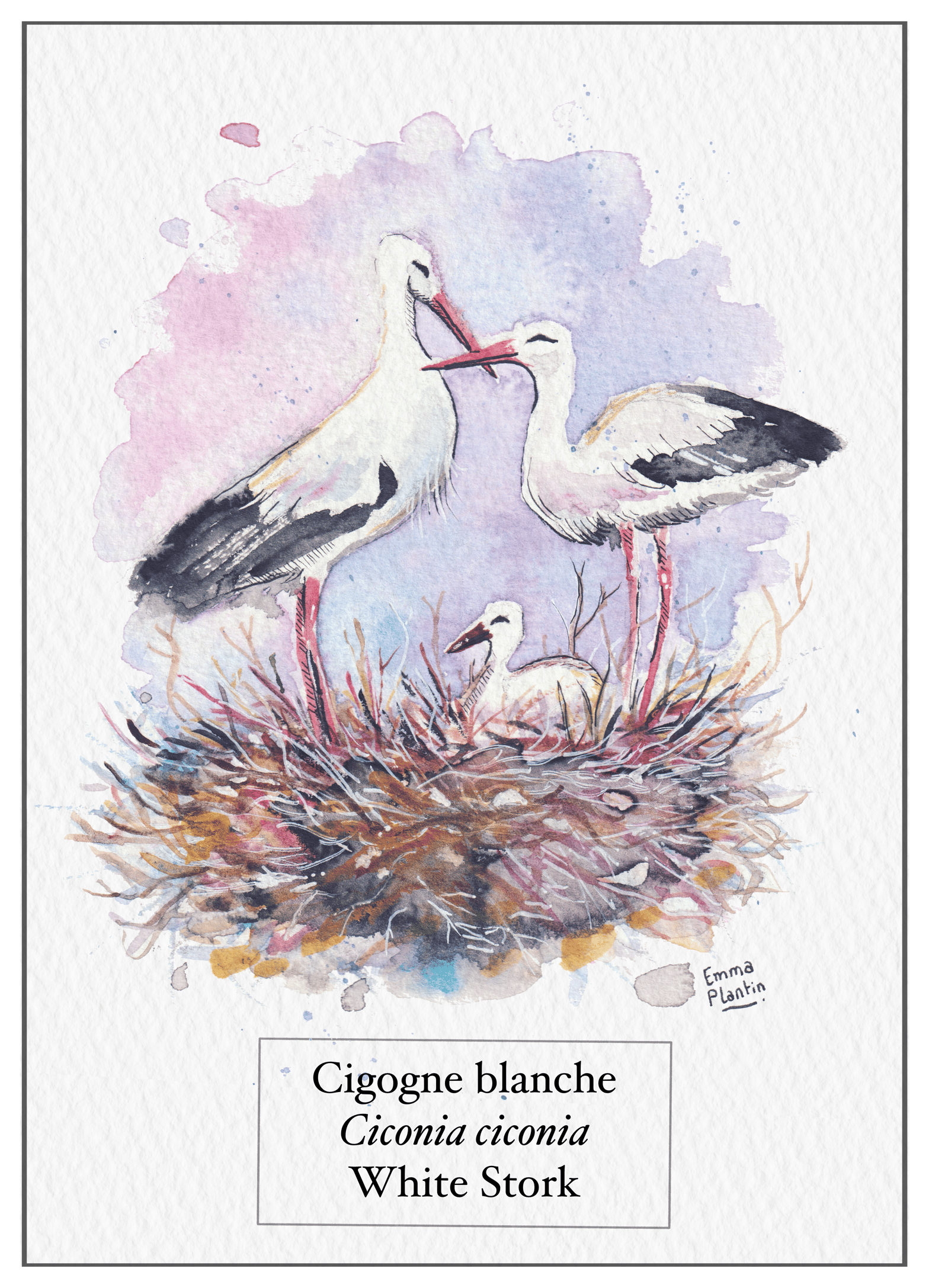
In French, the word cigogne (stork) comes from the Latin ciconia, possibly of onomatopoeic origin. But in English, storkhas older Germanic roots — it comes from Old English storc, related to the German Storch.
Whatever the origin, this large, majestic bird is instantly recognizable — and deeply symbolic in parts of Europe. In Alsace (northeastern France), it’s more than just a bird: it’s a cultural icon. So much so that in the 1970s, when local populations were on the brink of extinction, an ambitious reintroduction program was launched. Thanks to legal protection and ongoing conservation efforts, hundreds of pairs now nest in the region again.
(Wikipedia, The Good Life France, The Connexion)
🔍 What does it look like?
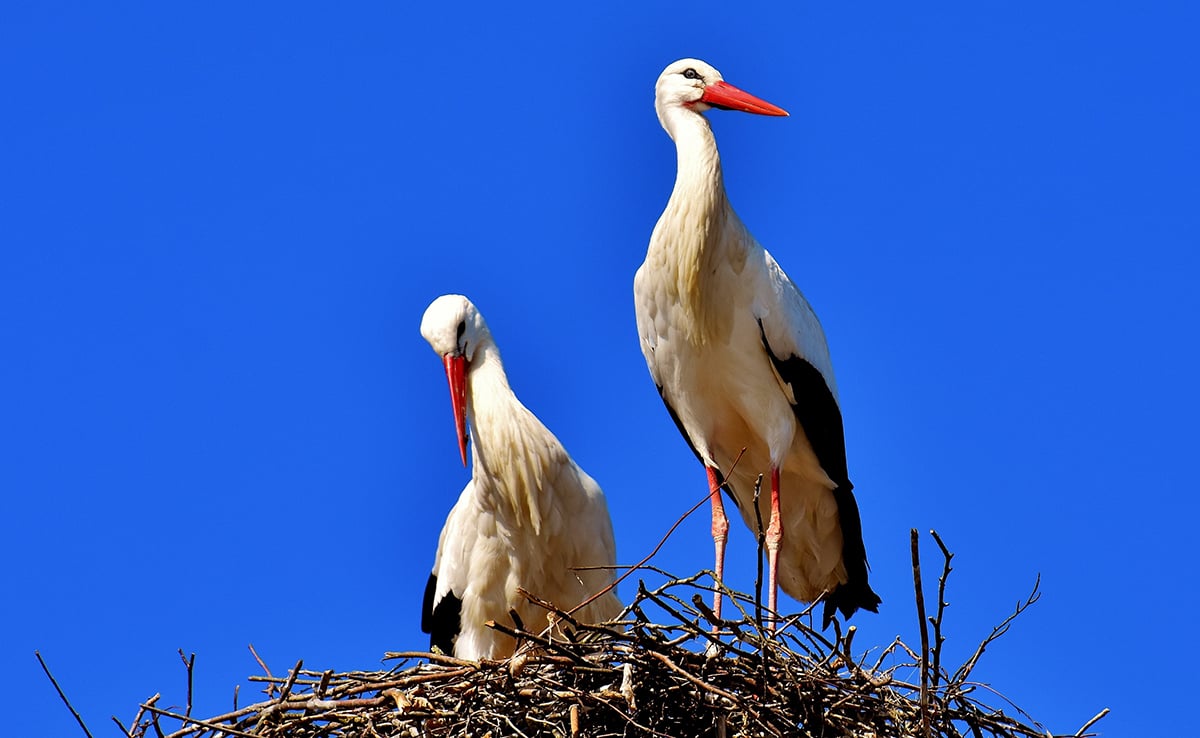
Tall and elegant, the white stork stands about 1 to 1.15 m high (3.3–3.8 ft), with a wingspan reaching up to 2.15 m (over 7 ft)! Its plumage is a striking white, contrasted by large black wing feathers. Both the long beak and legs are a bright red. Males and females look very similar.
🎶 A silent bird? 🧐
Contrary to popular belief, storks are not completely mute: their syrinx (vocal organ) is underdeveloped, which greatly limits their range of vocalizations. Instead, they communicate mainly through the well-known bill-clattering sound, especially during pair reunions at the nest.
(Encyclopedia Britannica, San Diego Zoo)
🪺 How do they live?
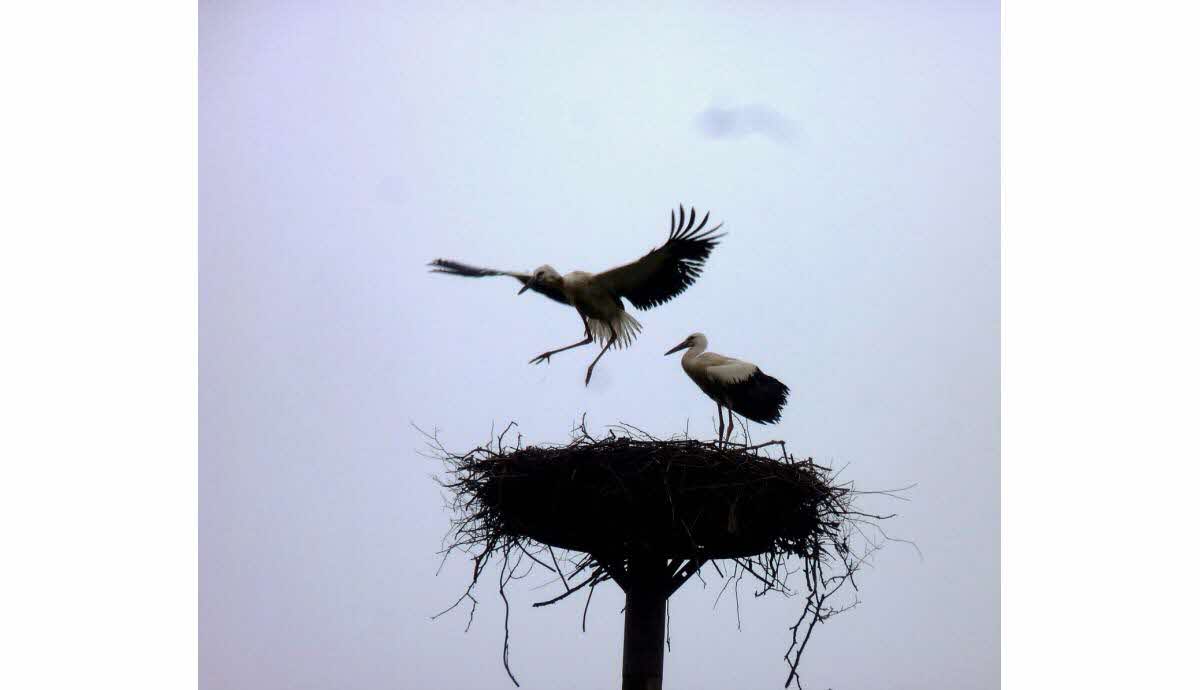
White storks nest on the ground… but in high places: rooftops, bell towers, pylons, tall trees, or artificial platforms set up for them. They usually lay 3 to 5 eggs, incubated for about 33 to 34 days by both parents. The chicks remain in the nest for almost two months before fledging, during which time the adults make frequent trips to bring them food.
(Wikipedia, BirdLife International, PMC)
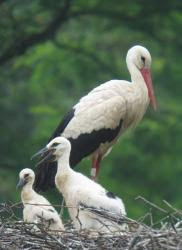
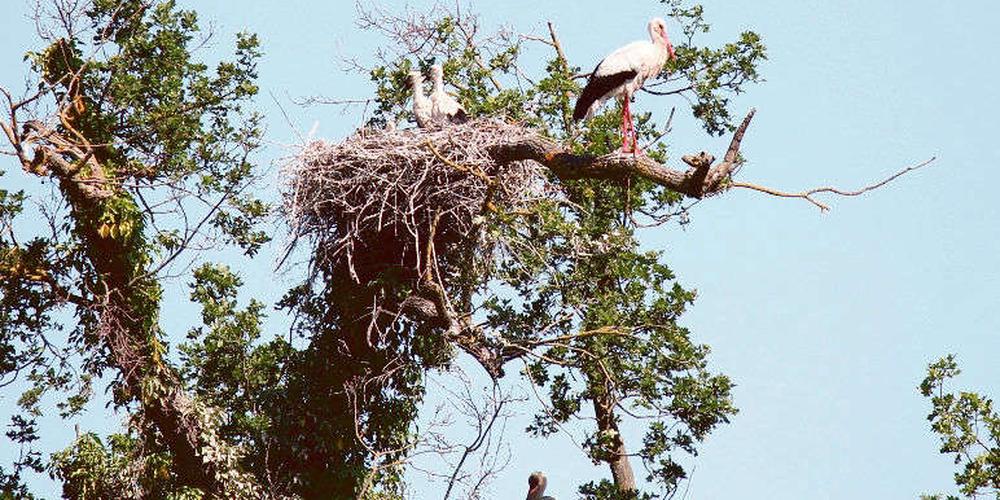
White storks are extremely loyal to their nesting sites, often returning year after year and gradually enlarging the same nest. These impressive structures can reach 1–2 meters deep, 0.8 to 1.5 meters in diameter, and weigh between 60 and 250 kg — sometimes even more! Over time, they become real micro-ecosystems, sheltering other birds, bats, and arthropods. Males typically return first in spring, reclaim the nest, and put on a bill-clattering display to welcome their mate.
(Wikipedia, SpringerLink, whitestork.org)
You can watch a stork nest live here or here!
🌍 Habitat and Migration
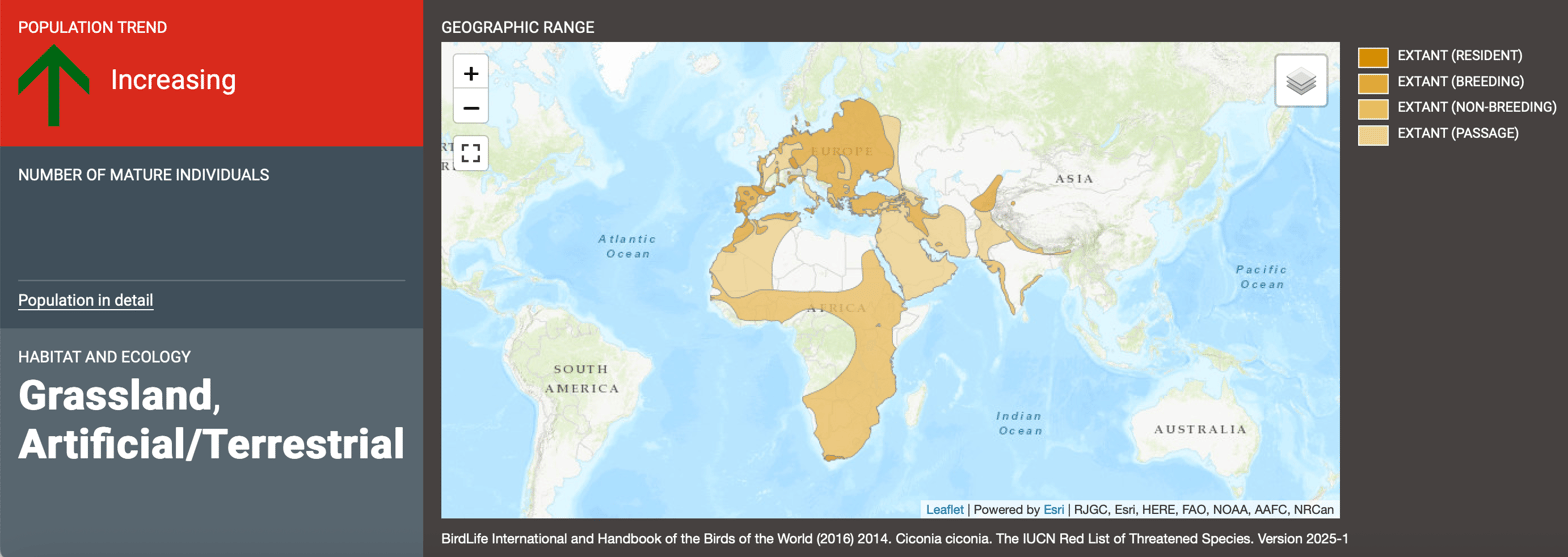
A species of open habitats — meadows, wetlands, extensive farmland — the white stork has learned to live closely alongside humans, often nesting in the heart of villages. A remarkable migrator and master glider, it avoids crossing the Mediterranean over water by following two major land migration routes: the western route via Gibraltar, and the eastern route via the Bosphorus and the Levant, taking advantage of thermal air currents. It winters in tropical sub-Saharan Africa all the way to South Africa, or on the Indian subcontinent.
(Wikipedia, BirdLife International, ScienceDirect)
Pssst → the song they probably listen to while flying!
🍽️ Diet
The white stork is an opportunistic omnivore: insects, earthworms, amphibians, reptiles, small mammals, fish, or even waste from landfills. It hunts mostly on the ground or in shallow water, methodically patrolling meadows and marshes. Some reintroduced populations (for instance in the UK) display diets very similar to natural populations.
(Wikipedia, PMC)
🌪️ A Threatened Bird
Overall, the white stork is doing well and its numbers are increasing in Europe, after experiencing sharp local declines in the 20th century. But nothing is guaranteed: electrocution on power lines, collisions, wetland drainage, intensive farming, and opportunistic dependence on landfills (whose closures can destabilize local populations) remain major conservation concerns.
(Wikipedia, BirdLife International, PMC)

LAST ASSESSED (IUCN): 2016
Global status: Least Concern (LC)
In France: Strictly protected since 1976
Estimated European population: 224,000 to 247,000 breeding pairs (BirdLife 2024)
(BirdLife DataZone, The Connexion, PMC)
🌍 Status and Conservation
Thanks to various reintroduction programs (Alsace, United Kingdom, Denmark), the installation of nesting platforms, legal protection, and public awareness campaigns, the white stork has made a spectacular comeback in several European countries. The species remains an excellent indicator of the quality of farmland and wetland ecosystems: protecting it means protecting a whole web of associated species.
(The Good Life France, The Connexion, BirdLife International, PMC)
💡 Fun Facts
Alsace and its “totem” stork: in the 1970s, only a few breeding pairs were left. Reintroduction centers (like in Cernay) played a crucial role. Today, over 600 pairs nest there again.
(The Good Life France)Architectural nests: some weigh over a quarter ton and provide shared housing for other species (cavity-nesting birds, bats). Researchers even found that these nests can attract remarkable biodiversity.
(Wikipedia, SpringerLink)Two highways to Africa: western European storks migrate mostly via Gibraltar, while eastern ones take the Bosphorus and Levant routes — two spectacular migratory “highways” visible on radar.
(BirdLife International, ResearchGate)A love story turned legend: the Croatian pair Klepetan & Malena moved hearts for nearly 20 years — he, a loyal migrant, returning each spring from Africa to reunite with his injured mate who could no longer migrate.
(Wikipedia)
This video is so cute 🥹👇 (and it’s in English/Croatian! 😉 to my Slovenian family )
📦 But… why do we say storks bring babies?
This folk belief, widespread across Europe, has roots in several ancient traditions:
They nest on rooftops: living close to humans and nesting above their homes, storks quickly became a symbol of home, fidelity, and fertility.
They return in spring, a season associated with rebirth and… conception! In fact, many babies were born nine months after winter, a time more favorable for intimate closeness…
In Germanic mythology, the stork was linked to Holda (or Hulda), a pagan goddess associated with motherhood, childbirth, and domestic life. People believed she sent the souls of babies from the swamps or wells.
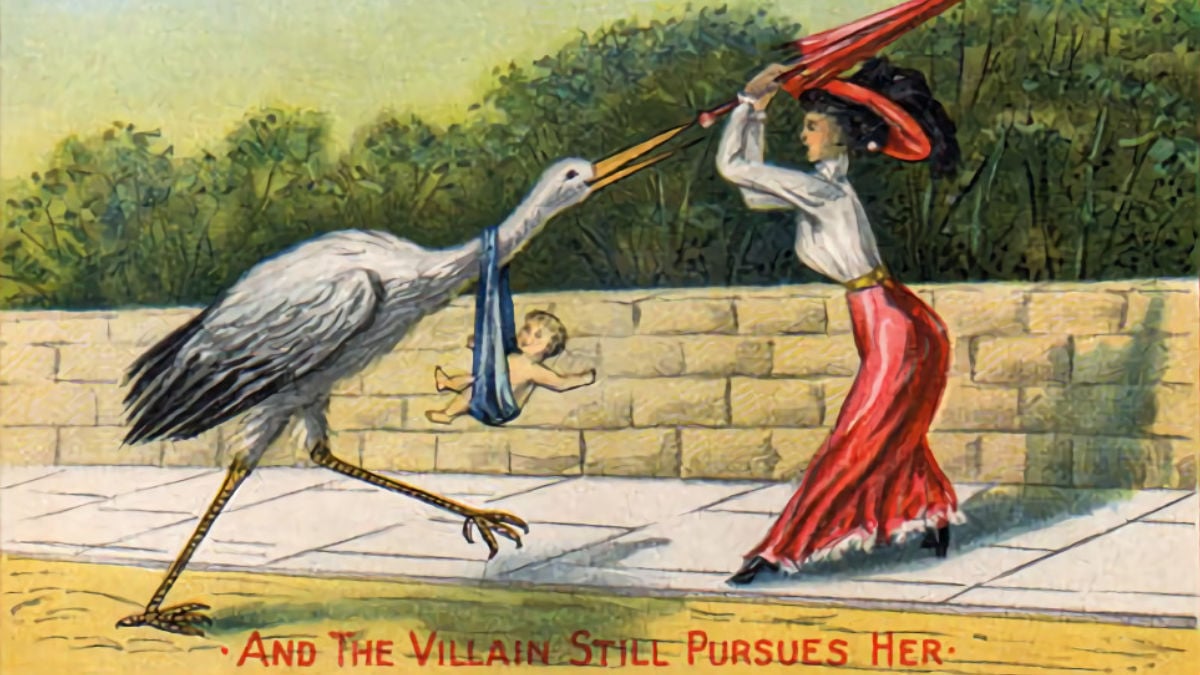
Andersen’s tale “The Storks” (1838) popularized the idea that storks carry newborns in bundles. (Listen here!)
To this day, in Germany, they say: “Der Storch bringt die Kinder” — "The stork brings the children."
Thank you for reading!
I hope you enjoyed this episode.
If you did, feel free to share it with others — and try to win exclusive rewards through referrals!
See you soon ☀️
For any comments or suggestions, feel free to write to me directly at: plantinemma@gmail.com

🕊️ I need your help to make Berthelot fly further! 🙏
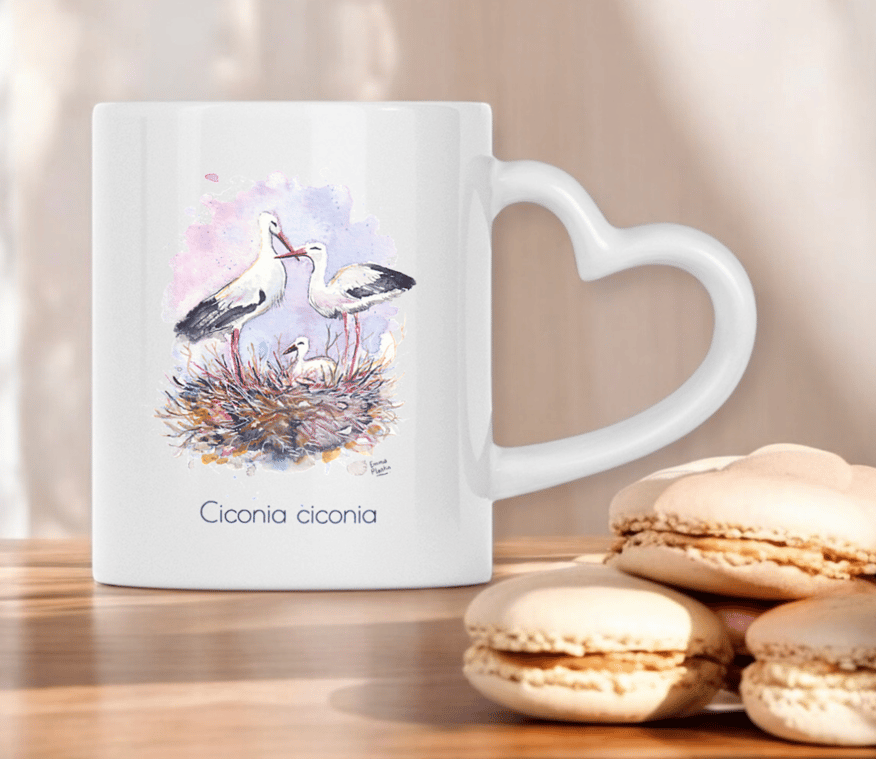
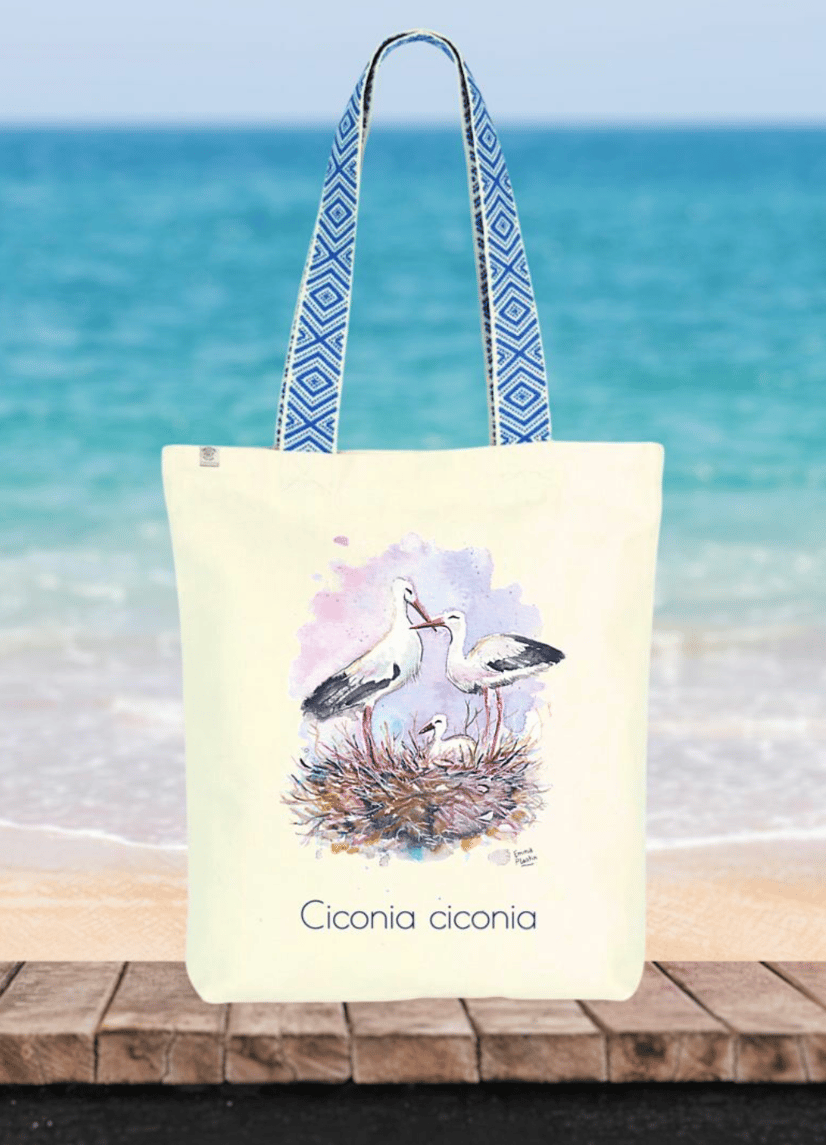
🎁 Support me by visiting the Berthelot Shop or by downloading a mobile wallpaper!
You'll find a gallery of all the birds I've drawn since the start of the project.
👆And/Or 👇
Share your personal link (and earn rewards based on the number of subscribers who sign up!) 🎉