

Hey, it’s Berthelot 🌼
Remember: this content is offered to you for free. So if you like it and want me to keep sending it to you:
👉 Like, comment, and especially share using the banner at the bottom of the newsletter...
It's also free 🙏 and for me, it's the best kind of support! 🤩
Hello everyone!
I hope you’re doing well and that the back-to-school season isn’t too hectic!
For me, it’s a bit of a rush 🙈 So I’m announcing that Berthelot will be taking a little “vacation” for the entire month of October.
I’m putting quotation marks around “vacation” because it won’t actually mean rest 🥲👇
Launching my yoga business,
Handling all the paperwork related to my move to the Netherlands,
My part-time illustration job,
And finally, taking part in Breizhtober 🎉: this is an art challenge inspired by Inktober (one drawing per day throughout October, based on prompts). I took part last year, but this time the official prompts inspired me less. So I chose the list created by Eor Glass (see the post here), centered on inner journeys, with the freedom to use watercolor, paint, digital media… It’s going to be a rush, but I know I’ll love it 🤩
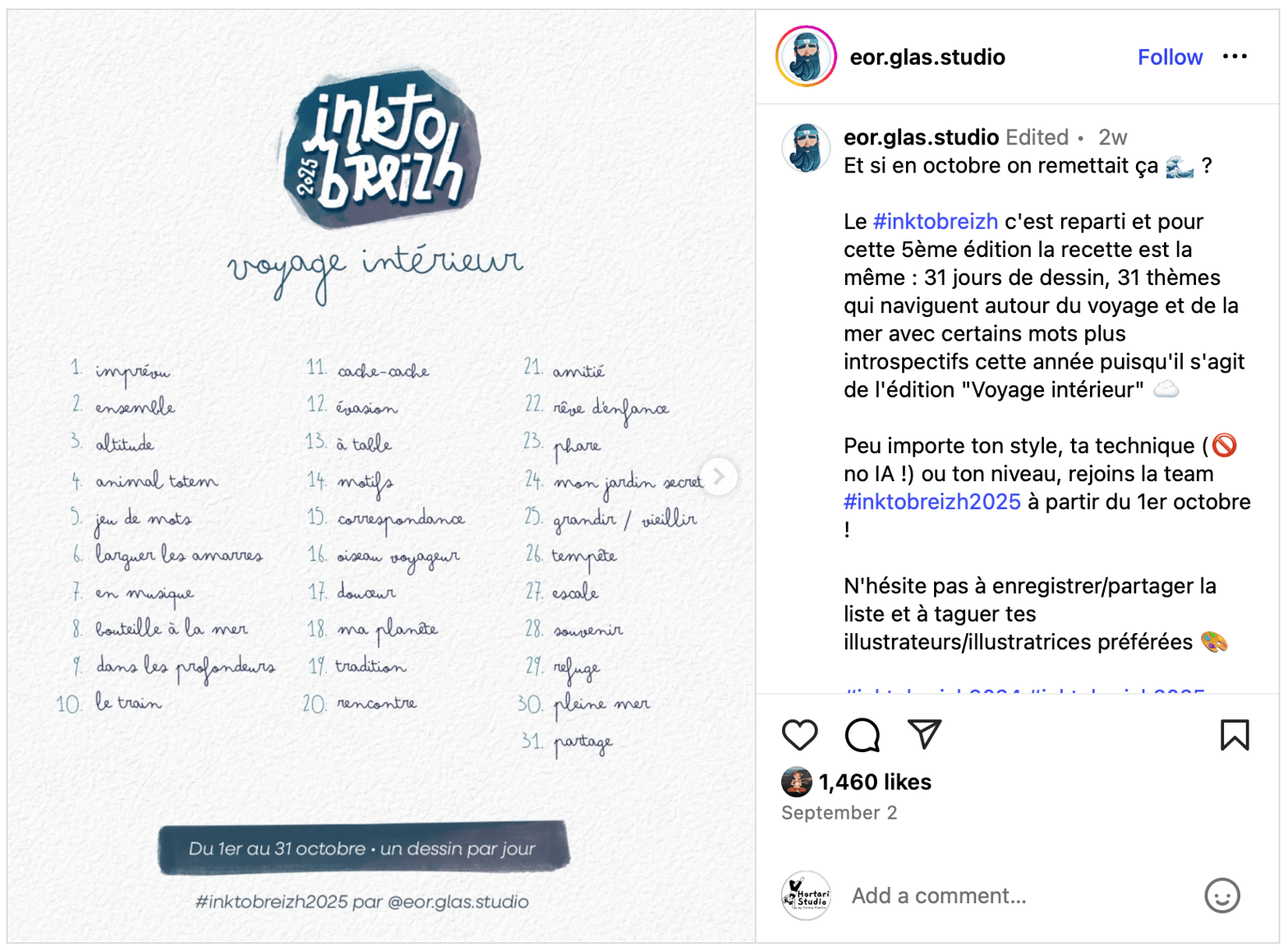
👉 If you miss Berthelot during this busy month, you can follow my Breizhtober drawings on Instagram: @emma.plantin14.
And since we’re talking about inner journeys and adventures, let’s take a detour today into the world of a great companion of explorers (real or imagined): the parrot. A talkative bird, a symbol of exoticism, sometimes a victim of trafficking, but also a star of literature and pop culture. Let’s set sail into the fascinating story of the pirate’s parrot! 🏴☠️
🏴☠️ The Image That Stuck
When we imagine a pirate, the clichés instantly surface: a weathered tricorne hat, a wooden leg, an eye patch… and of course, a parrot perched on the shoulder. 🦜
A colorful bird that squawks, repeats swear words, and punctuates the captain’s orders. It has become a universal archetype, to the point that a pirate without a parrot seems incomplete. But is this image real, or pure invention?
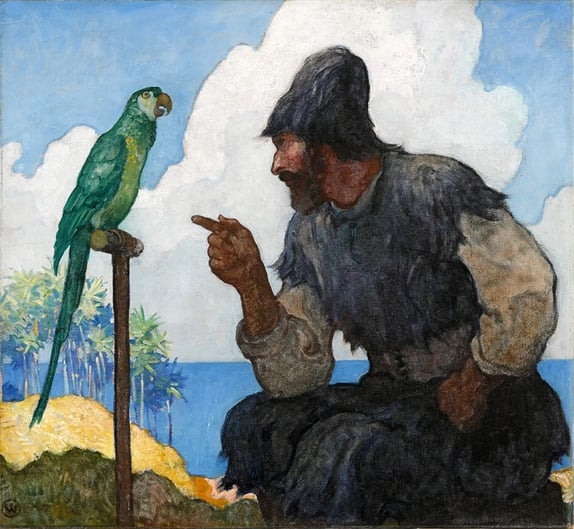
🌍 The Parrot as Exotic Merchandise
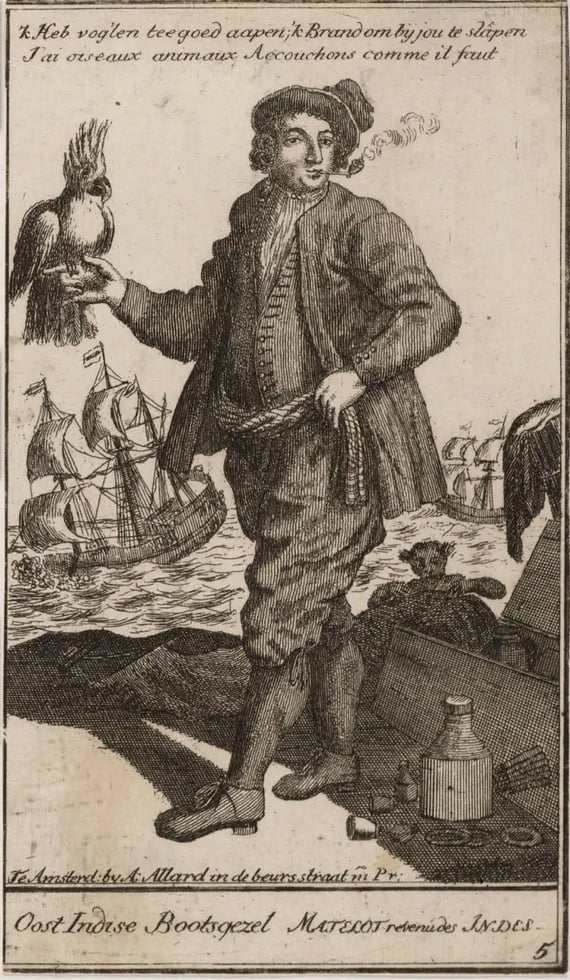
Historically, parrots weren’t the faithful companions of every pirate, but rather living trophies and valuable trade goods.
Buccaneers roamed the Caribbean, South America, and West Africa — regions filled with brilliantly colored parrots.
These birds were highly prized in Europe, where nobles and wealthy households paid dearly to own such exotic pets.
Bringing home a parrot signified: “I’ve traveled far, and I’ve brought back a living treasure.”
The explorer William Dampier (late 17th century) noted that “almost every sailor carried home a parrot or two,” which “chattered prettily” (National Maritime Historical Society).
The Capuchin friar Denis de Carli (1667) described a ship leaving Brazil for Lisbon filled with parrots, monkeys, and other exotic animals — living merchandise destined for Europe (Benerson Little, Of Pirates & Parrots).
👉 But keeping them alive on long voyages was difficult. Fragile, stressed, and poorly fed, many parrots died before reaching their buyers.
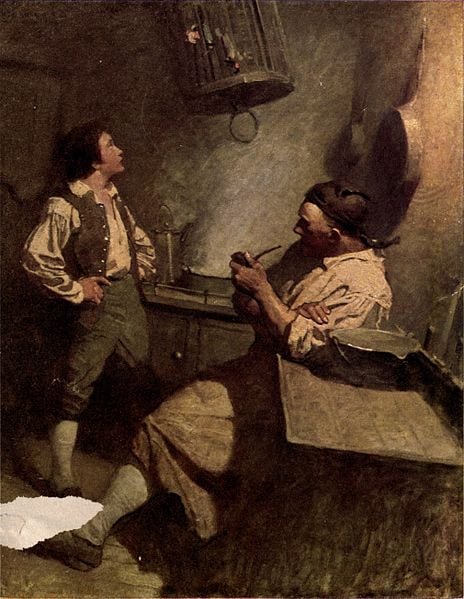
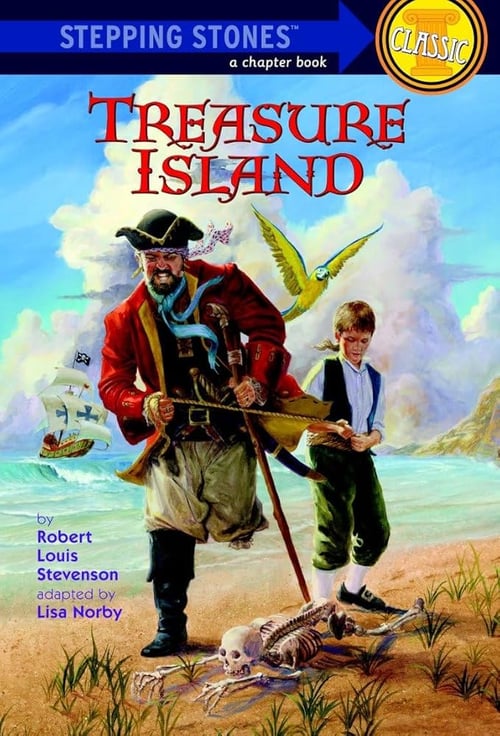
📖 Treasure Island: The Birth of the Pirate’s Parrot
If today we automatically associate parrots with pirates, it’s largely thanks to a groundbreaking novel:
Treasure Island by Robert Louis Stevenson (1883).
The pirate Long John Silver owns a parrot that became legendary:
Its name is Captain Flint, in homage to the dreaded (fictional) pirate under whom Silver once served (Wikisource, trans. André Laurie).
Silver boasts: “I named my parrot Captain Flint, after the famous pirate.”
The bird constantly screeches: “Pieces of eight! Pieces of eight!…”, echoing the Spanish silver coins (pesos de a ocho) that circulated widely in the Caribbean (Ralentir Travaux).
In the novel, the parrot isn’t just decoration but a character in its own right:
A living memorial to the dead Captain Flint,
A grotesque echo of pirate greed,
A noisy companion that gives Silver both comic and sinister undertones.
This literary role was decisive: from then on, every adaptation — film, theater, comics, animation — kept the parrot. The cliché was born (Atlas Obscura).
🎭 After Treasure Island, a Flock of Parrots in Pop Culture
After Stevenson, pirate parrots spread across popular culture, from cinema to manga, video games to music:
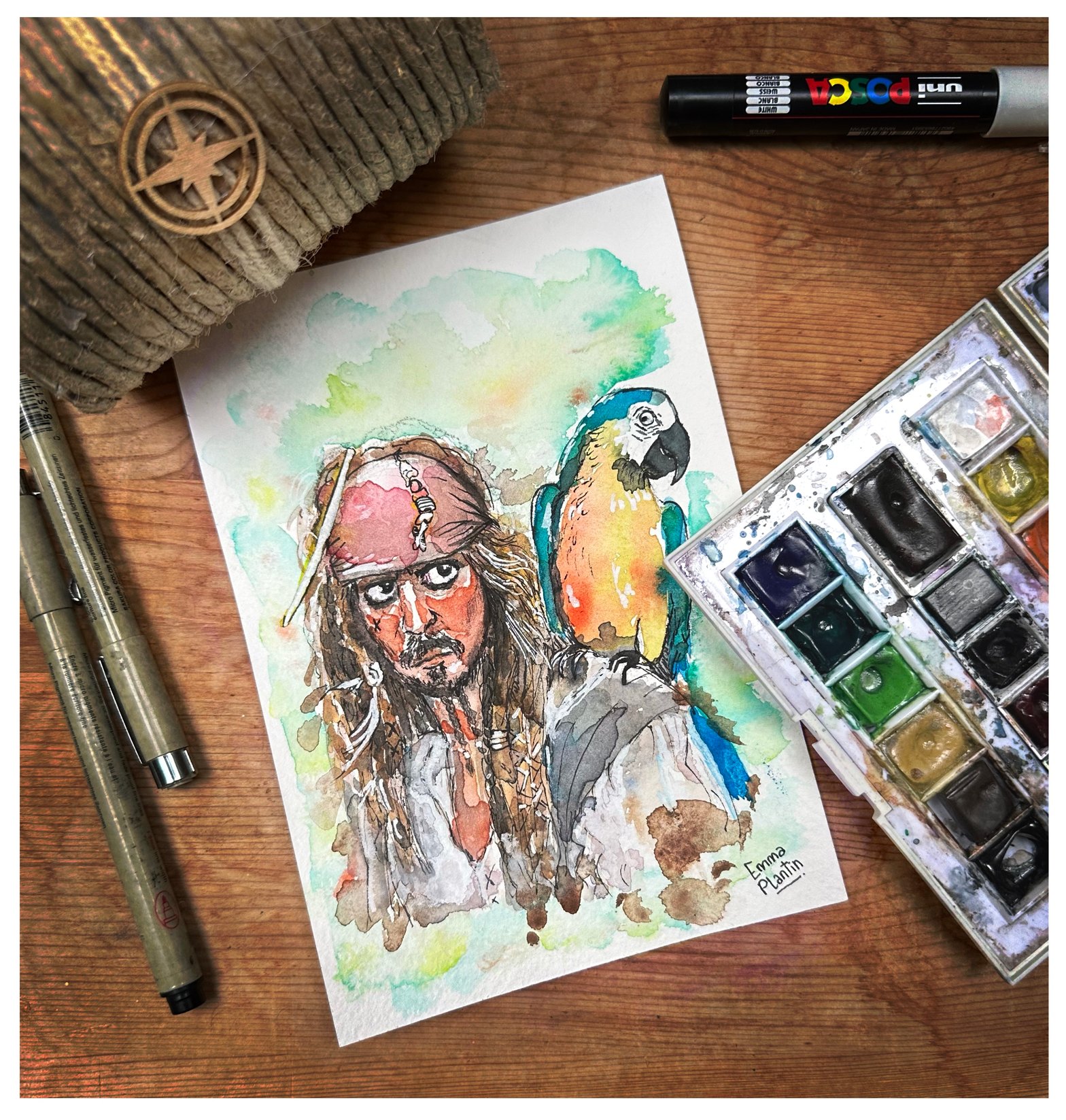
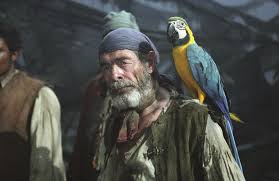
🎬 Pirates of the Caribbean (2003–…) plays with the trope through Cotton, a mute sailor whose parrot speaks for him — flipping the cliché on its head: here it’s not the man commanding the bird, but the bird giving voice to the man (IMDb).
🎬 Treasure Planet (Disney, 2002) literally transposes Stevenson’s story into space: Silver’s parrot becomes Morph, a mischievous pink alien — a direct nod to Captain Flint (Wikipedia).
Isn’t it the best Disney? 🥹
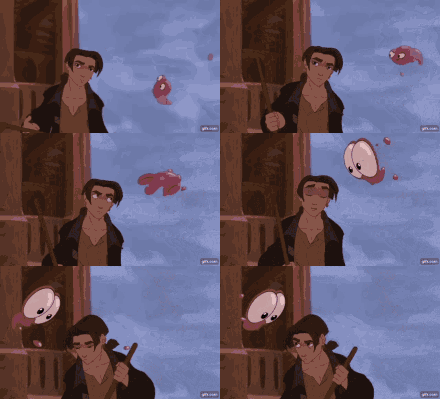
🎮 In the cult video game The Secret of Monkey Island (1990), the parrot appears as a running gag, a direct descendant of Stevenson’s “Pieces of eight!” trope (Tropedia).
🎤 Musician Jimmy Buffett (1946–2023) popularized tropical-pirate imagery, with parrots everywhere at his concerts. His fans even call themselves Parrotheads.
📚 In the manga One Piece (Eiichirō Oda, 1997–…), parrots only appear as symbolic Easter eggs, mascots of minor pirate crews, in homage to the Western cliché. Oda quickly breaks away from it, creating his own navigation system with the Log Pose (Reddit).
🐸 Muppet Treasure Island (1996) pushes the stereotype into parody: squawking parrots, plush parrots, parrots that sing — proof that the trope had become universally recognizable (Muppet Wiki).
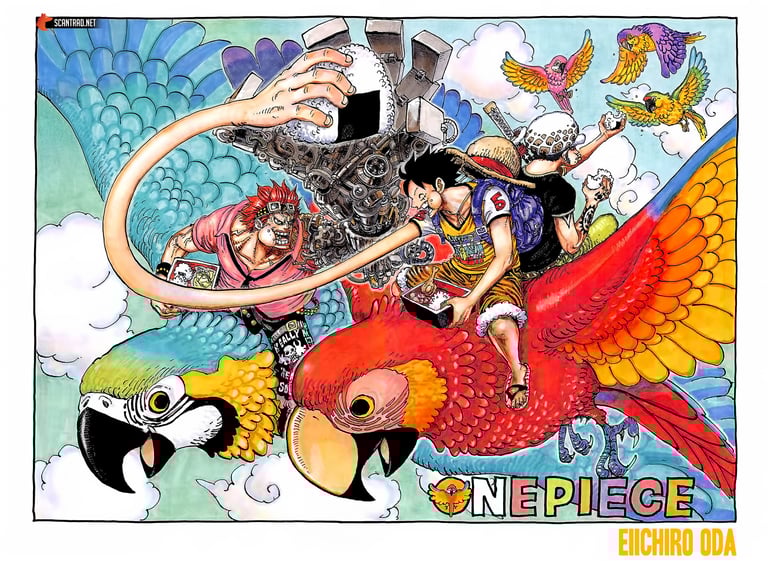
👉 And these are just a few examples. For a more complete list, see Tropedia – Pirate Parrot.
🔎 ZOOM: Trafficking, Mortality, Declines, Invasive Species
Behind the flamboyant legend lies a far darker reality. 😢
Species decline: nearly 28% of parrots (111 out of ~398 species) are considered threatened according to the IUCN (Mongabay).
Causes: habitat destruction + capture for the pet trade (ResearchGate).
Example: the African grey parrot has suffered dramatic declines, largely due to demand as a “talking parrot” (Audubon).
Invasive species: in Europe, escaped parrots have established thriving urban colonies. In the Netherlands, the ring-necked parakeet (Psittacula krameri) grew from ~5,000 individuals in 2005 to over 22,000 in 2022, especially in Amsterdam and Rotterdam (DutchNews).
Transport mortality: modern studies estimate that up to 30% of captured birds die before reaching the final market (ResearchGate).
👉 In Conclusion…
Behind the chatty parrot that amuses us in novels, films, or manga lies a much more complex story. Exotic companion brought back as a trophy, fictional hero turned universal cliché — the parrot has also paid a heavy price: mass capture, high mortality in captivity, wild population declines, and invasive outbreaks in Europe.
This contrast between the colorful legend and the ecological reality makes the bird even more fascinating. Because beyond the “pirate parrot” stereotype, there is the real animal: intelligent, social, and endowed with an extraordinary gift for mimicry. And it is precisely this vocal talent — which has always made parrots feel so close to us — that I’d like to end this journey with.
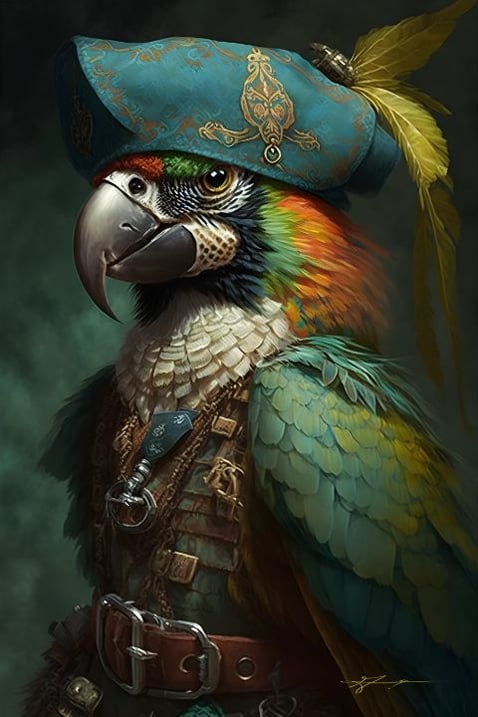
📣 Do You Know Why and How Parrots Talk?
Parrots don’t have vocal cords, but an organ called the syrinx, located at the base of the trachea, which allows them to mimic almost any sound. In the wild, imitation strengthens social bonds within the flock. In captivity, we become their “flock”: repeating our words is their way of keeping in touch.
And for a final flourish: the most talkative parrot ever recorded was Puck, a budgerigar, credited in Guinness World Records with a verified vocabulary of 1,728 spoken/used words — not just random repetitions. Proof that parrots don’t merely echo: they can build a living dictionary!
Thank you for reading! I hope you enjoyed this issue.
If you did, please share it around,
and try your luck at winning some exclusive perks through referrals!
See you soon ☀️
For any remarks or suggestions, feel free to write me at: plantinemma@gmail.com
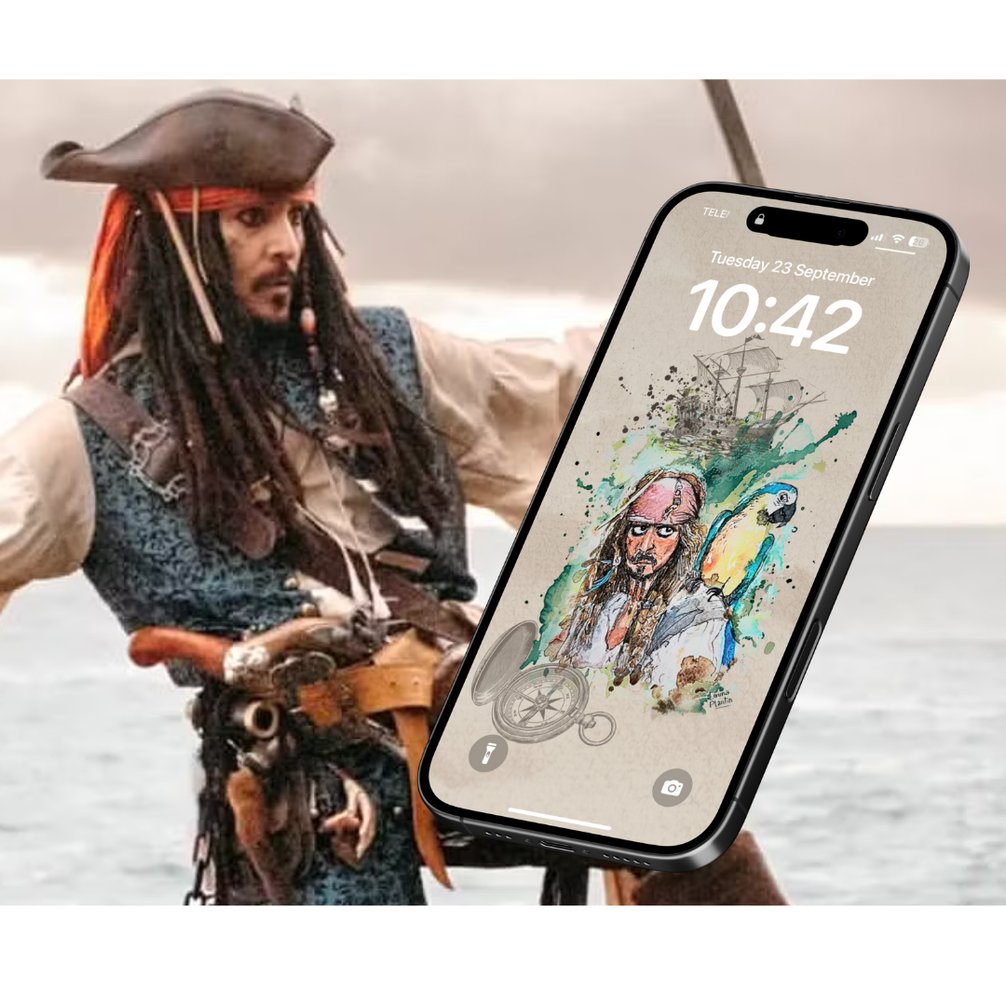
🎁 Support me by visiting the Berthelot Shop or by downloading a mobile wallpaper!
You'll find a gallery of all the birds I've drawn since the start of the project.
👆And/Or 👇
Share your personal link (and earn rewards based on the number of subscribers who sign up!) 🎉