Wednesday, May 14, 2025 – 🕊️ Identifying birds, Part 1/2
Wake up every Wednesday to surprising bird facts, paired with a handmade illustration!


Hello everyone, I hope you're doing well!
I wanted to start by warmly thanking you for your support. One morning, I opened Kessel and – wow! In just one day, my reader count literally tripled! This is probably thanks to a mention in an article by Chloé de Voxe, for which I am deeply grateful. Thank you from the bottom of my heart – it truly means a lot to me. ❤️ It’s incredibly motivating to keep going! 🤩
Today, I have a special two-part issue for you, entirely dedicated to bird identification. In this first part, we'll explore why this activity can be beneficial – both for biodiversity and for ourselves! – and next week, I’ll share some practical tips to help you get started if you’re a beginner. I hope you enjoy this format!
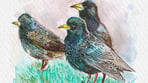
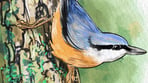
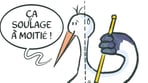
As a bonus, this issue and the next will be illustrated by works from other talented artists, whom I warmly thank for their contributions. You’ll find their credits and Instagram links below each piece – be sure to check out their work!
Thank you to them, and thank you for being more and more of you reading my work 🙏
PS: Apologies to my English-speaking readers – most of the resources I refer to below are in French. Given my current personal situation, I haven't had the time to find equivalent English ones. Thanks for your understanding 🙏
Why learn to identify birds?
The goal of this article isn’t to convince you to become an ornithologist or a dedicated birdwatcher – I’m still far from being an expert myself 😇 – but simply to share some reflections and, perhaps, spark a bit of curiosity. Birds are a beautiful gateway not only to better understanding ecology but also to caring for ourselves – yes, really!
Birds as Indicators of Planetary Health
Birds are ideal for reconnecting with nature. Easy to spot thanks to their predominantly diurnal activity and distinctive songs, they offer an accessible entry point to biodiversity. Their diversity, while less vast than that of other groups, makes identification more manageable, making birdwatching particularly rewarding.
But beyond their charm, birds play a crucial role as indicators of ecosystem health. Sensitive to even minor environmental changes, they often react to disruptions before we even notice them, as Philippe J. Dubois, ornithologist and co-author of the book Ornithothérapie, beautifully explains.
For example, climate change has led to shifts in the migratory patterns of many species – some advancing or delaying their migrations, others changing their breeding grounds. While reports from the IPCC on climate or the COP Biodiversity agreements can seem abstract, observing these shifts in bird behavior in the wild provides a more tangible and accessible understanding of the direct impacts of human activity.
Observing birds, then, is also a way to engage in biodiversity conservation and directly witness the effects of human actions on nature. Learning to recognize birds, understanding their needs and behaviors, is a way of stepping into their world and grasping their importance in our ecosystems. It also helps us adopt appropriate behaviors, like avoiding the unnecessary rescue of fallen chicks, a topic I’ll likely cover in a future article.
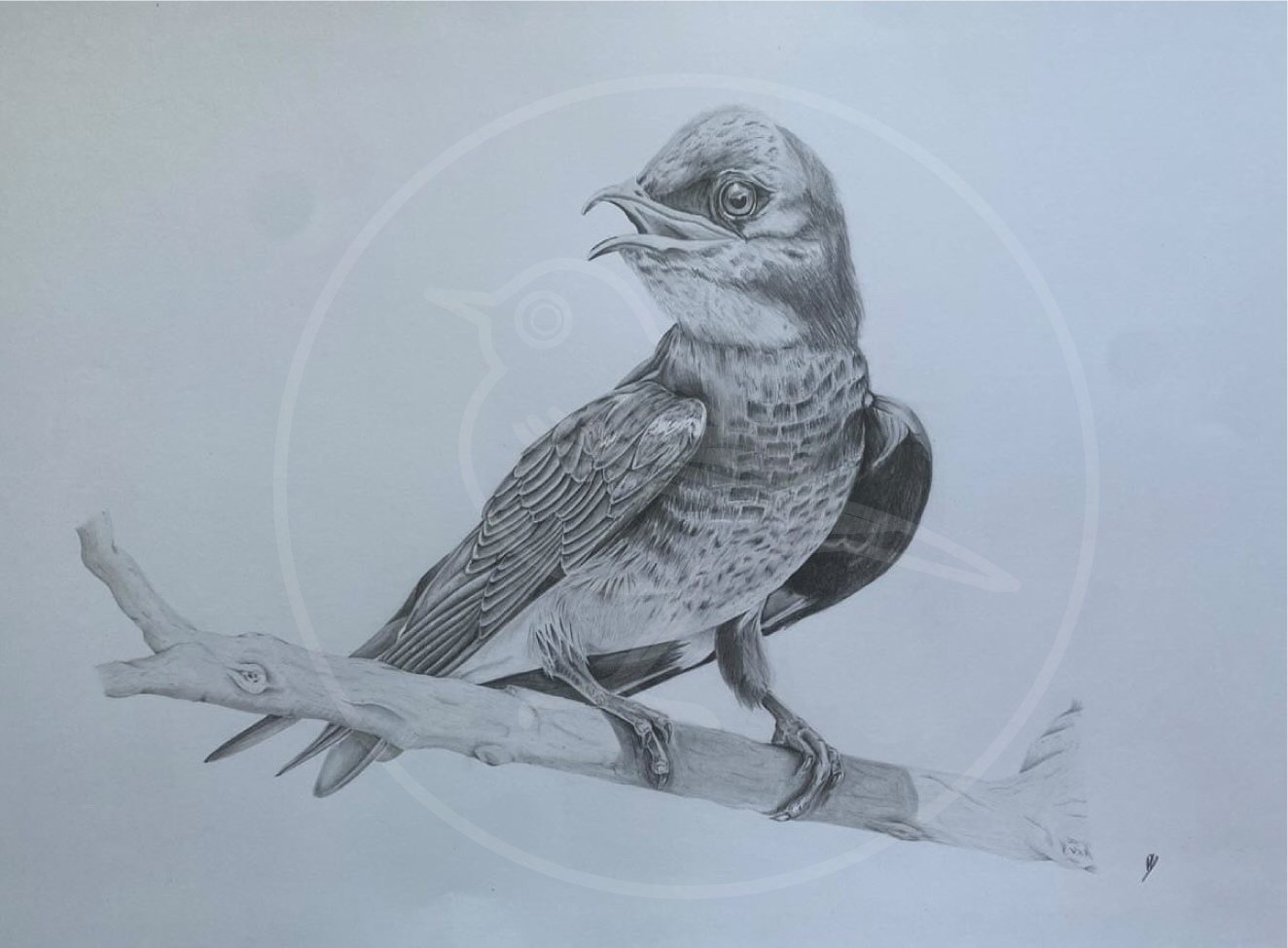
It Preserves the Memory of Life… and You Can Pass it Down to Future Generations!
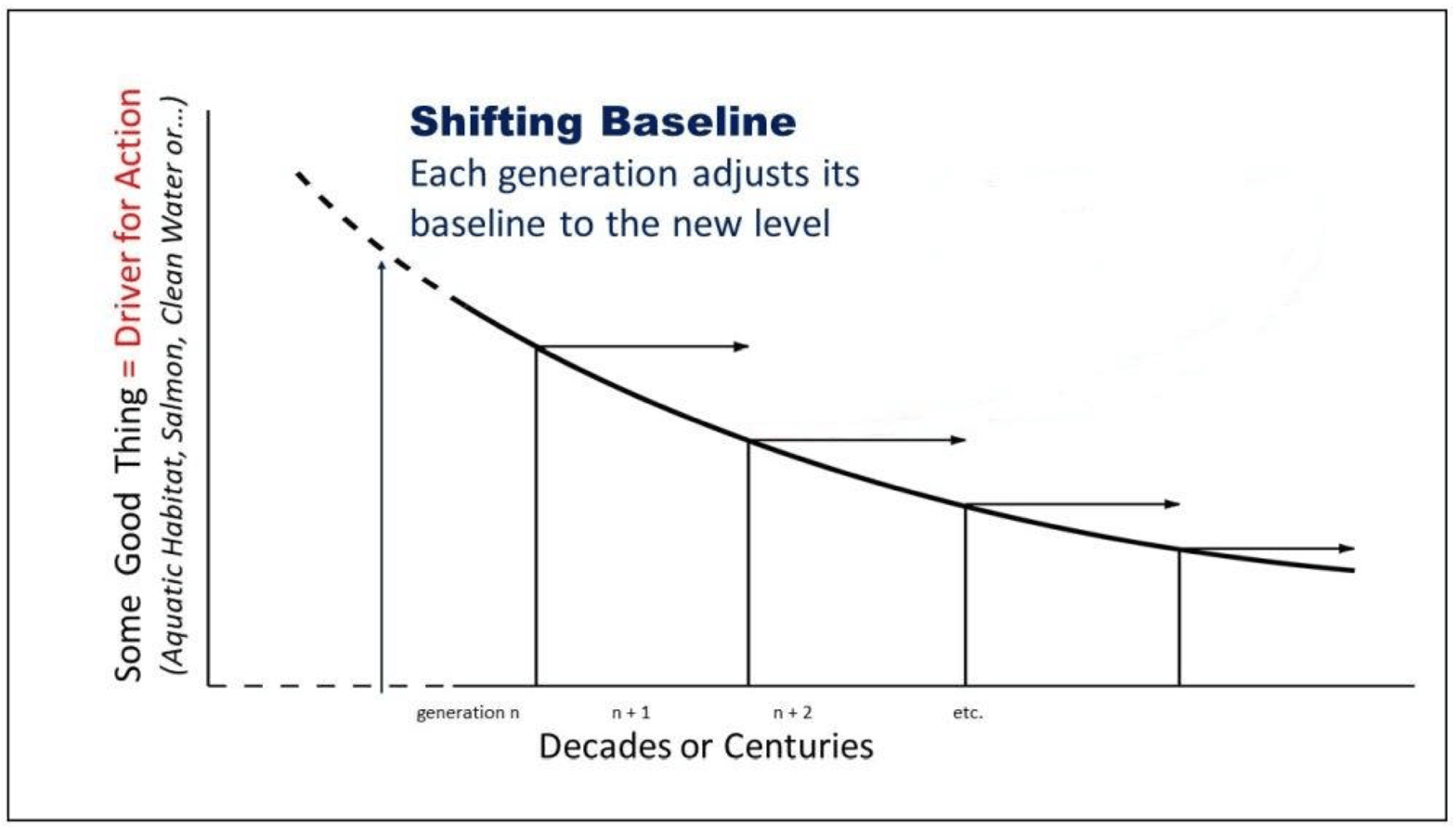
Observing and identifying birds is not just a hobby; it’s a powerful ecological and civic act. By naming the species we see (or no longer see), we preserve the collective memory of biodiversity and resist the “shifting baseline syndrome.” This concept describes our tendency to perceive the current state of nature as normal simply because we haven’t experienced the past. EUROPARC Federation
Let me share a concrete example: in the 19th century, passenger pigeons were so numerous that their flocks could darken the skies for days at a time. Renowned naturalist John James Audubon reported witnessing one such flock in Kentucky in 1813, where daylight was obscured as if during an eclipse.
However, within just 60 years, this species vanished. Intensive hunting, deforestation, and habitat loss led to their rapid extinction. The last known individual, a female named Martha, died in 1914 at the Cincinnati Zoo.
This sudden disappearance illustrates the concept of "ecological amnesia": each generation perceives the current state of nature as normal, unaware of the changes that have occurred.
This amnesia has tangible consequences: in Europe, nearly 600 million birds have disappeared over the past 40 years – a loss often overlooked because it goes unnoticed by current generations. This decline is primarily driven by agricultural intensification, including the excessive use of pesticides and fertilizers.
By observing birds, we reconnect with a reality often forgotten, raise awareness among those around us, and take an active role in preserving our environment.
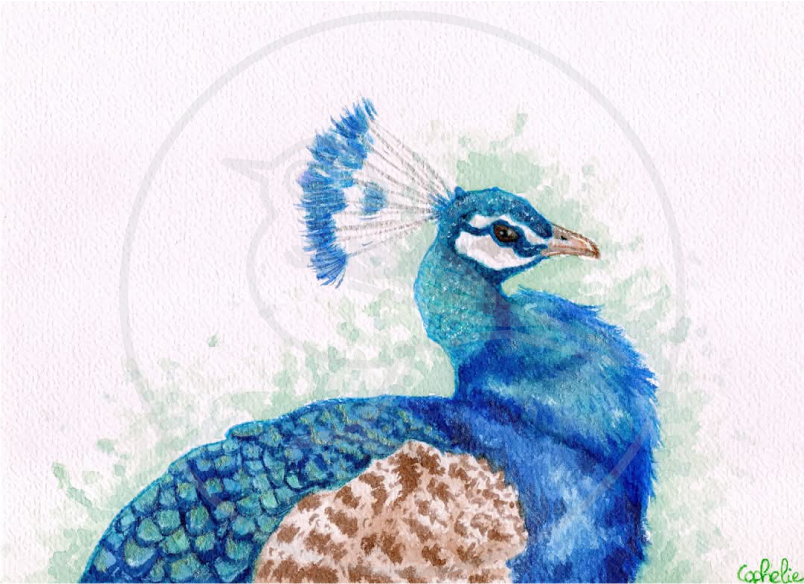
Disconnecting Our Overstimulated Minds
We all know it: our modern world is pulling us further away from nature. With the explosion of digital technologies, artificial intelligence, and social media, taking the time to sit on a rock and simply gaze at a landscape has become almost an act of resistance.
Our attention spans are also in crisis. According to a Microsoft study, the average human attention span dropped from 12 seconds in 2000 to just 8 seconds in 2015 – one second less than that of a goldfish (itsocial.fr). Meanwhile, younger generations are spending less and less time outdoors. In the UK, screen time has surged by 50% in the past 10 years, further reducing opportunities to breathe in fresh air (childinthecity.org).
You may have heard this often-repeated (though hard to source) statistic: children today are reportedly better at recognizing brand logos than tree species. This disconnect extends to adults as well. A Vakita interview, conducted during the last European elections, revealed that many candidates struggled to identify common birds – a surprising and telling observation. Try this experiment with those around you: how many people can recognize the song of a blackbird or a chickadee? But a Disney classics blind test? We'd all probably be champions…
This reality highlights a growing disconnect between humans and the natural world.
Moreover, a growing body of research shows that being in nature has a positive impact on our mental health…
🧠 Because Birdwatching is Good for the Soul!
Being outside, marveling at nature, and unplugging from all this overstimulation can be a real mental boost – almost like therapy. Cyril Dion even said on social media that “disconnecting should be prescribed as a medical treatment.”
Birdwatching gives you a reason to be outdoors and do something special. It’s a bit like when people got into Pokémon Go – rediscovering their cities, meeting new people, and getting in some exercise (wink, Maxime 😉) – except these “Pokémon” are very much real!
Since 2018, doctors in the UK have been allowed to prescribe nature to help combat depression. The Japanese have been practicing forest bathing (shinrin-yoku) – essentially therapy through trees – for even longer.
And bird therapy is just as real!
The book Ornithotherapy by ornithologist Philippe J. Dubois and novelist Sigolène Vinson explores the mental health benefits of birdwatching.
Scientific studies back this up, showing that listening to birdsong significantly reduces stress, eases anxiety, and lifts your mood. A meta-analysis published in PNAS found that natural sounds – especially birdsong – reduce stress and enhance overall well-being. What’s more, another study revealed that exposure to these sounds can lower cortisol levels, the hormone linked to stress.
On a personal note, it was this growing sense of unease that pushed me to dive into the topic and create Berthelot. I needed a way to ground this practice in my routine, and what better way than a weekly appointment to make it stick? In fact, I’m about to start reading Ornithotherapy and I’ll share my thoughts once I’ve finished!
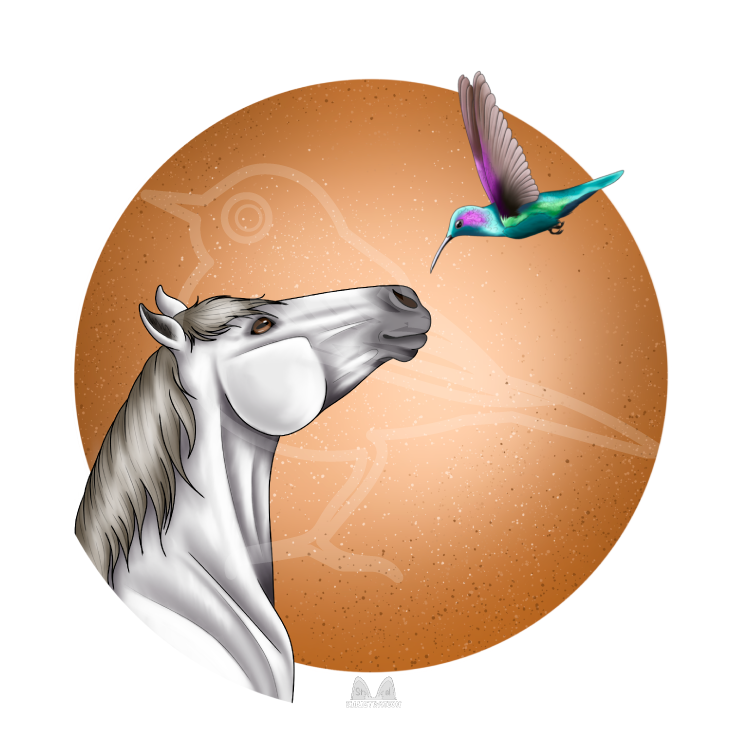
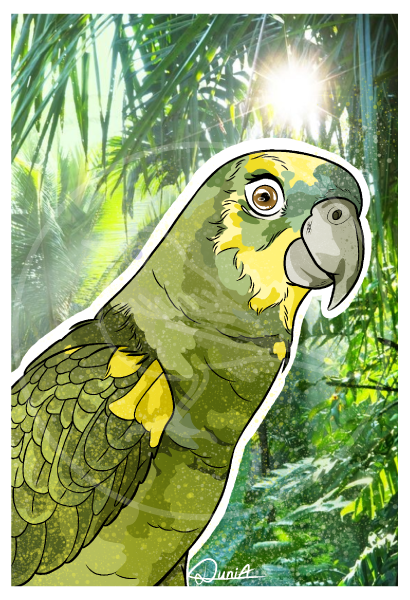
Illustration by @stelillustration, who started her art journey a year ago. She specializes in pet portraits but also explores human portraits and other digital projects.
Conclusion
Identifying birds is more than just a hobby – it’s a way to feel more connected to the natural world and fight eco-anxiety. By focusing on the present moment, birdwatching helps calm negative thoughts and reconnect with nature. Every time you listen to a birdsong or catch a glimpse of a feathered friend, you’re taking a small step toward protecting our environment.
Sharing this passion means planting seeds of wonder around you. By passing on your fascination for birds, you’re helping to awaken awareness and bring a touch of green to our often cluttered minds.
I hope this article inspires you to look up and listen closely. Until next time, think about me when you’ll see a bird! 😉
I hope you enjoyed this newsletter!
See you soon for more cool anecdotes about birds 👀
🕊️ I need your help to make Berthelot fly further! 🙏
🎁 Support me by visiting the Berthelot Shop or by downloading a mobile wallpaper!
You'll find a gallery of all the birds I've drawn since the start of the project. Every purchase will be converted into a donation for bird protection associations.
👆Et/Ou 👇
Share your personal link (and earn rewards based on the number of subscribers who sign up!) 🎉
Link to be found at the bottom of the newsletter 😇
A newsletter written by :

🕊️ Berthelot (English 🇬🇧)
🕊️ Berthelot (English 🇬🇧)