Wednesday, May 7, 2025 – 🕊️ The Kakapo, the flightless parrot 🦜
Every Wednesday, discover a new watercolor bird illustration, along with its description!


Hello everyone,
I hope you're doing well!
Today marks the big departure for my return to France, accompanied by a little one-month journey.
As mentioned earlier, there may be a small pause in the regular newsletter sends until mid-June. But I will do my best to keep up the pace 😇
I apologize once again for the little glitches related to the migration to Kessel – but this time, everything should be perfect! I hope you enjoy the new format.
This week, we're diving into the world of a unique and fascinating bird: the Kakapo! This nocturnal, flightless parrot, native to New Zealand, is far from being an ordinary bird. Discover its surprising behavior and its extraordinary survival story!
🦜 Bird of the day: the Strigops Kakapo (Strigops habroptilus), the flightless nocturnal parrot.
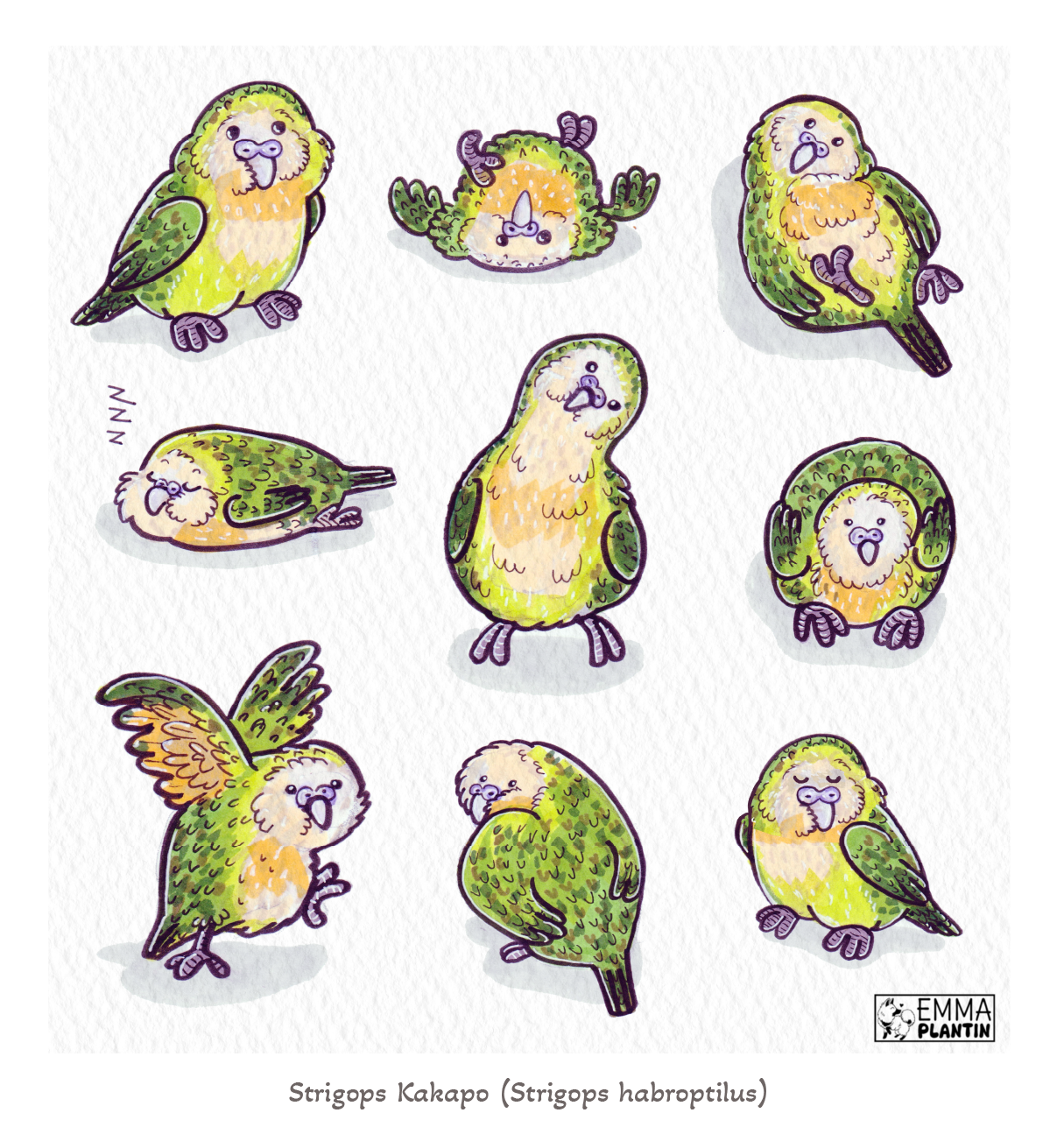
🦜 Physical Description
The Kakapo is a large bird with an olive-green plumage speckled with yellow and brown. It has a rather curious feature: although it has large wings, they are too small to allow it to fly effectively. It prefers to use them to maintain its balance when climbing trees or moving on the ground. With its powerful beak and strong legs, it is an excellent climber, but it remains primarily a terrestrial bird.
🌿 Habitat and Behavior
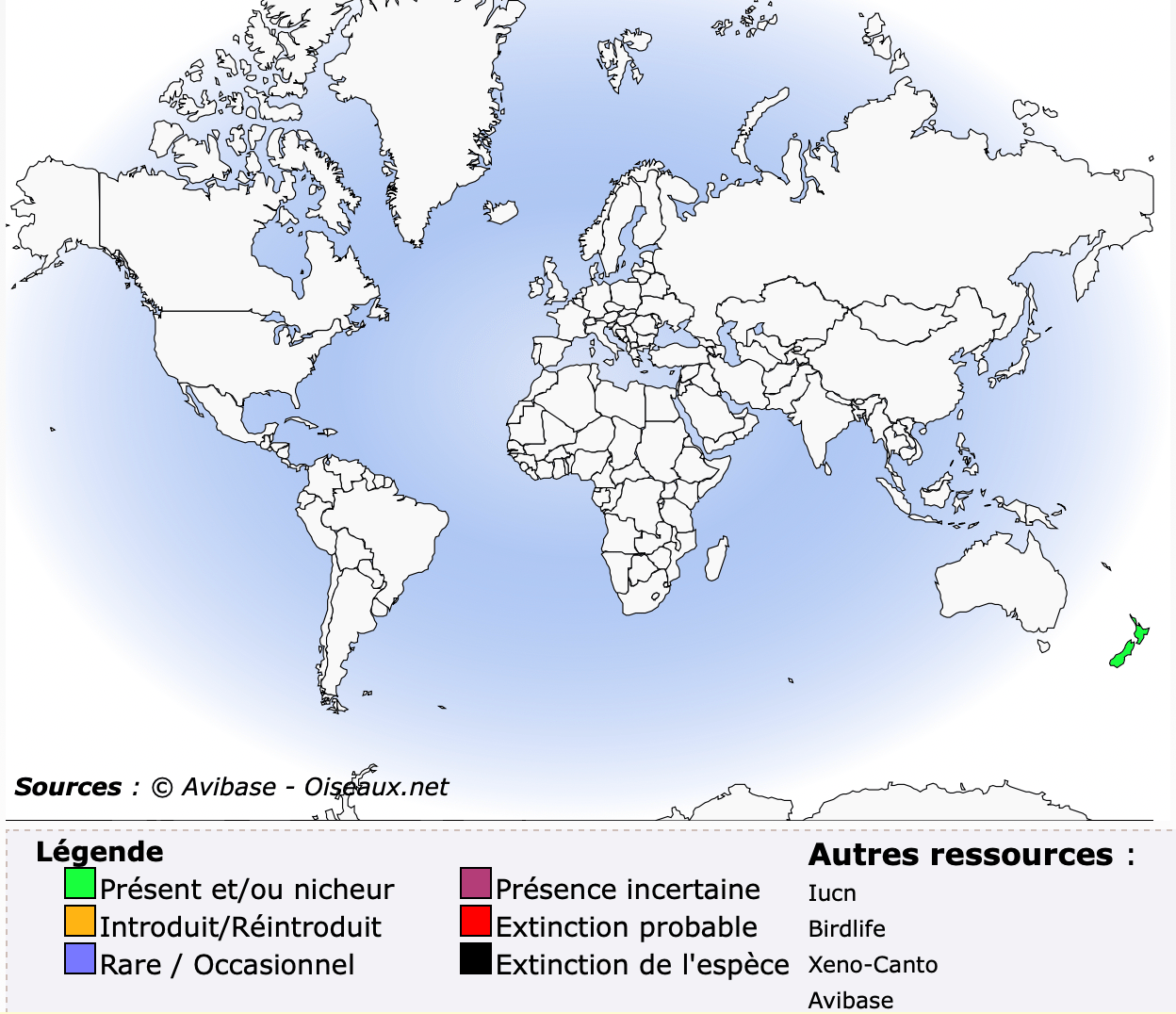
The Kakapo is endemic to New Zealand, meaning it is naturally found nowhere else in the world. It mainly lives in dense forests and protected islands. It is a nocturnal bird, preferring discretion and naturally avoiding predators. However, its wariness of humans has decreased over time. Thanks to controlled conservation efforts, these birds have shown a certain curiosity toward researchers, which is quite rare among wild birds!
🍽️ Diet and Lifestyle
An herbivore, the Kakapo primarily feeds on fruits, seeds, leaves, and roots. It uses its powerful legs to climb and forage for food in trees. Due to its slow metabolism, it does not need to eat frequently.
🐣 Reproduction
The Kakapo has a rather unique reproductive behavior. It adopts a "lekking" behavior: males gather in an open area and make loud, low-frequency calls to attract females. Unfortunately, the low population and the remote geographical distribution make encounters and successful reproduction chances difficult.
🌍 Conservation Status
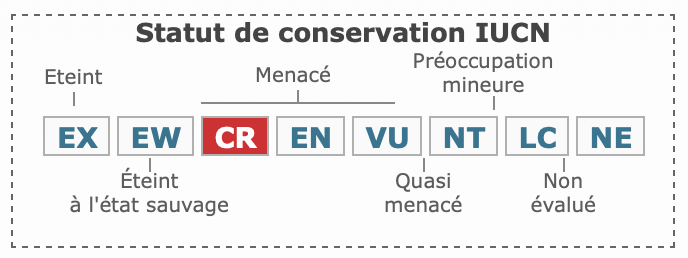
Unfortunately, the Kakapo is critically endangered today. Hunting, habitat loss, and the introduction of predators like rats and stoats in New Zealand have decimated its population. Fortunately, conservation efforts have helped save a few individuals (~160), and breeding programs have been established to try to stabilize the population.
If you want to learn more about local protection initiatives for this species, I invite you to check out this website. You can even adopt a Kakapo to protect it !
👀 Anecdote
A fascinating fact about the Kakapo: it is one of the heaviest birds in the world (4kg, more than my dog Loki !), and it can't really fly. It is also one of the only nocturnal parrots and can live up to 90 years. A true gem of nature!
As mentioned earlier, it's also not very shy around humans... case in point here 🤣 (he seemed very happy to meet someone — maybe a little too much 🫣)
🎥 For more information on this clumsy parrot, watch this super nice video ! (3min)

I hope you enjoyed these fun facts about the Kakapos!
See you soon for more cool anecdotes about birds 👀

🕊️ I need your help to make Berthelot fly further! 🙏
🎁 Support me by visiting the Berthelot Shop or by downloading a mobile wallpaper!
You'll find a gallery of all the birds I've drawn since the start of the project. Every purchase will be converted into a donation for bird protection associations.
👆Et/Ou 👇
Share your personal link (and earn rewards based on the number of subscribers who sign up!) 🎉
Link to be found at the bottom of the newsletter 😇
A newsletter written by :

🕊️ Berthelot (English 🇬🇧)
🕊️ Berthelot (English 🇬🇧)